Loading

Non-Superlative Religious Ideologies

Absolutely nothing if not sublimely eloquent, Dale Carrico criticizes transhumanism as necessarily superlative -- depending on exaggerations, absolutes, extremes, determinisms, and so forth.


I agree with his criticism of superlativity as nonsensical and practically detrimental. However, I disagree with his assessment of transhumanism's reliance on superlativity. Dale suggests that, without superlativity, transhumanism is nothing more than his own technoprogressivism, which he describes as a commitment to universal healthcare and pro-choice politics. He's incorrect.


For all the reasons that criticisms of superlativity do not apply to some theologies, such as those concerned with progressing gods, the criticisms also do not necessarily apply to transhumanism. For all the reasons that non-superlative theologies are not necessarily humanism, non-superlative transhumanism also is not necessarily technoprogressivism.


For good or ill, some ideologies are more powerful than others, precisely because of what Dale considers to be their cult-like attributes. The religious attitude will endure when and where the non-religious attitude will not. The power of the esthetic and the meaning of the myth will move the person that would otherwise halt apathetically. Superlatives have been and are certainly at play among those of us who are religious, but they are hardly universal.


Most transhumanists, of course, would not identify themselves as religious persons. Fine. Neither would early adherents to various major ideologies that we now commonly recognize as religions. Whether future persons identify transhumanists as religious or not, we're operating with a different esthetic than that espoused by Dale's technoprogressivism, with or without superlativity.


I don't know how long and to what extent transhumanism, or mormonism, will endure and excel as organizing forces, but I'll bet on something like them outlasting any ideology that expresses itself most fully in eloquent moderation.

Invitation to Leon Kass

I've heard through the grape vine that Leon Kass has told his students that Mormon Transhumanists are very confused persons. I invite Leon to explain to us our confusion, and put to rest my suspicion that what he really means is that we confuse him. What do you say, Leon?

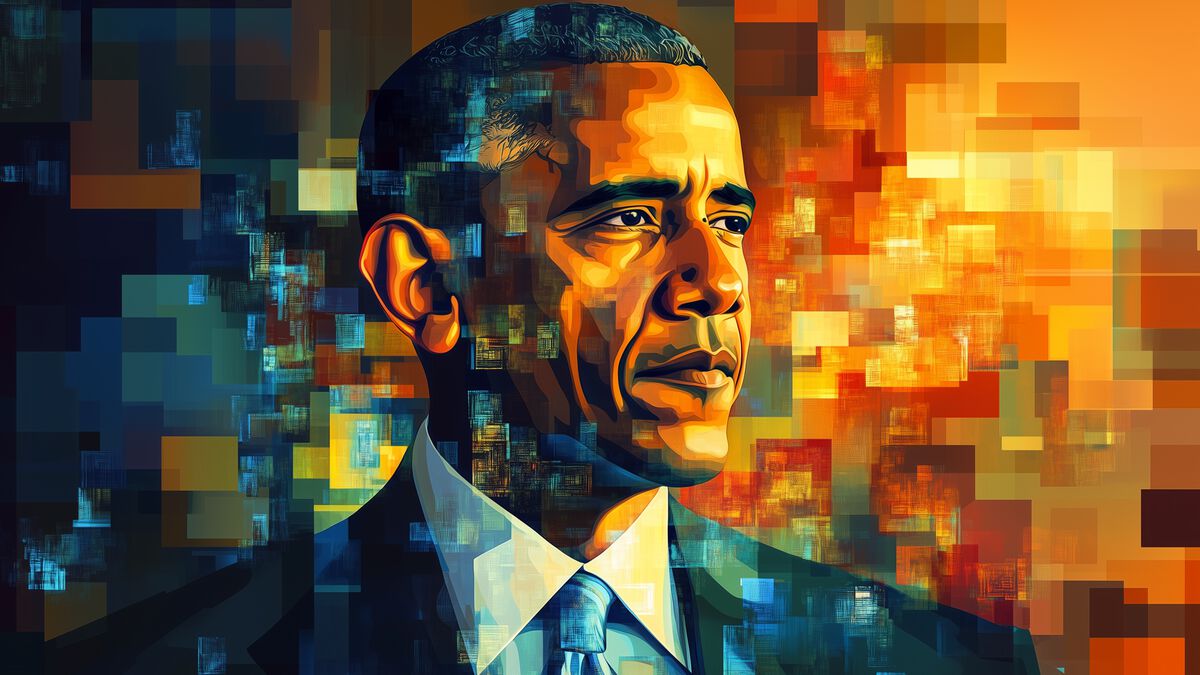
President Barack Obama, Technophile-in-Chief

Today, the United States of America celebrated the inauguration of President Barack Obama. While we may each identify various reasons to join in the celebration, there are a few that may stand out for Mormon Transhumanists.


First, Obama's station illustrates increasing global respect for diverse morphology. Although humans come in many forms, our leaders tend to come in one form: that of a historically-empowered narrow segment in our various communities. Supposing for ourselves a future of diversely enhanced minds and bodies, we can take encouragement from the fact that Obama's divergence from traditional form only made him a stronger candidate, on the whole, at this time.


Second, Obama continues to advocate the value and wise use of science and technology. As his latest expression of support, during the inaugural address, he said, "We will restore science to its rightful place, and wield technology's wonders . . ." Underscoring this advocacy, he has already released a new whitehouse.gov web site, complete with a blog and an outline of his policy objectives related to science and technology.


Third, Obama champions inclusion of and constructive interaction between persons of differing ideological perspectives, particularly differing religious and non-religious persuasions. This is evident in his attempt to emulate Abraham Lincoln's team of rivals, and in speeches such as his "Call to Renewal" keynote in 2006. He repeated this perspective in the inaugeral address, stating, "For we know that our patchwork heritage is a strength, not a weakness. We are a nation of Christians and Muslims, Jews and Hindus -- and nonbelievers." Of all persons, Mormon Transhumanists, whose perspectives many deem the most unlikely and strange of combinations, should appreciate the will and work to bridge differences of ideology.


I applaud President Obama, and look forward with hope that he will prove to be the kind of leader we need in our rapidly changing world.

Is God a Subtle Singleton?

Michael Anissimov blogged today about a short paper entitled "What is a Singleton?" by Nick Bostrom. The paper defines "singleton" as a world order with a single decision-making entity at the highest level, and briefly describes a variety of possible singletons. Of particular interest, the paper notes the following:

"A singleton that is a superintelligent machine might adopt a modus operandi that would make its presence virtually undetectable in the day-to-day dealings of its inhabitants. It could act merely as a subtle enforcer of certain background conditions that could serve, e.g. to guarantee security or to administer some other minimal governmental tasks. Such a superintelligence singleton might also use evolutionary algorithms and other means to increase internal diversity, if doing so would promote its ability to achieve its goals."
Keep that idea in mind while I direct your attention to another paper, entitled "Are you living in a computer simulation?", also authored by Nick Bostrom. This second paper presents the argument that either we almost certainly will not simulate many worlds like our own or we almost certainly already live in a simulated world. In the "Interpretation" section, the paper notes:

"Although all the elements of such a system can be naturalistic, even physical, it is possible to draw some loose analogies with religious conceptions of the world. In some ways, the posthumans running a simulation are like gods in relation to the people inhabiting the simulation: the posthumans created the world we see; they are of superior intelligence; they are 'omnipotent' in the sense that they can interfere in the workings of our world even in ways that violate its physical laws; and they are 'omniscient' in the sense that they can monitor everything that happens. However, all the demigods except those at the fundamental level of reality are subject to sanctions by the more powerful gods living at lower levels.
"Further rumination on these themes could climax in a naturalistic theogony that would study the structure of this hierarchy, and the constraints imposed on its inhabitants by the possibility that their actions on their own level may affect the treatment they receive from dwellers of deeper levels. For example, if nobody can be sure that they are at the basement-level, then everybody would have to consider the possibility that their actions will be rewarded or punished, based perhaps on moral criteria, by their simulators. An afterlife would be a real possibility. Because of this fundamental uncertainty, even the basement civilization may have a reason to behave ethically. The fact that it has such a reason for moral behavior would of course add to everybody else's reason for behaving morally, and so on, in truly virtuous circle. One might get a kind of universal ethical imperative, which it would be in everybody's self-interest to obey, as it were 'from nowhere'."
Putting these ideas together, we observe a similarity with some theistic views. Imagine. A superintelligent world-computing neohuman, virtually undetectable by the inhabitants of the worlds it computes, acts as a subtle enforcer of background conditions that serve its purposes, while using evolutionary algorithms to increase the diversity of the inhabitants of its worlds to achieve its goals. I suspect ideas along these lines may contribute toward improvements to the New God Argument.

Theological Implications of New Ancestor Simulations from the Military

Christian Schumann-Curtis dropped me a note to point out an article on Slate, which reports that the United States Department of Defense is working on software that simulates dead soldiers, so that their children can interact with them for emotional support. This is just one more data point in the trend of rapid advances in simulation technology. Extrapolate that trend into the future and you encounter an interesting implication: either the advance will eventually and permanently halt (due to unforeseen hard technical limits, totalitarian political demands, or the destruction of our civilization) or we almost certainly live in a computed world (kind of like the Matrix, but not necessarily so evil). If you're not sure why these are the implications of advances in simulation technology, check out the New God Argument.