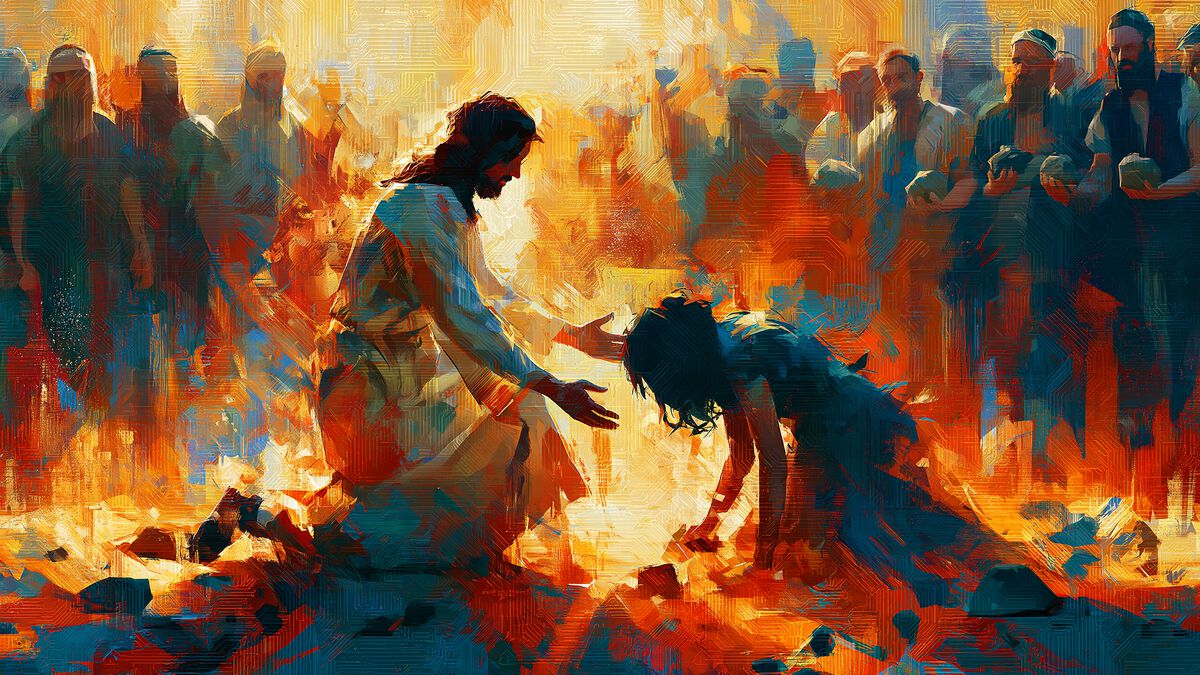
<?xml version="1.0" encoding="UTF-8"?> <feed xmlns="http://www.w3.org/2005/Atom"> <title>Lincoln Cannon</title> <subtitle>Lincoln Cannon is a technologist and philosopher, and leading voice of Mormon Transhumanism.</subtitle> <id>https://lincoln.metacannon.net</id> <link href="https://lincoln.metacannon.net" rel="alternate" type="text/html"/> <link href="https://lincoln.metacannon.net/feed.xml" rel="self" type="application/atom+xml"/> <updated>2026-10-19T17:12:14-06:00</updated> <entry> <title>My Affirmation of Superhumanity</title> <id>https://lincoln.metacannon.net/2026/10/my-affirmation-of-superhumanity.html</id> <link href="https://lincoln.metacannon.net/2026/10/my-affirmation-of-superhumanity.html" rel="alternate" type="text/html"/> <published>2026-10-19T00:00:00-06:00</published> <author> <name>Lincoln Cannon</name> </author> <content type="html"> <![CDATA[ <div class="card artwork-card"> <a class="caption-link-image popup-link-image hidelink" data-caption="Dignity" data-title="&quot;Dignity&quot; by Lincoln Cannon" data-url="https://cloud.metacannon.net/lincoln/images/artwork/dignity.png" href="#" title="View a larger uncropped version of &quot;Dignity&quot; by Lincoln Cannon"><img src="https://cloud.metacannon.net/lincoln/images/thumbnails/lincoln/images/artwork/dignity-1200x675.jpg" alt="&quot;Dignity&quot; by Lincoln Cannon"></a> </div> <p>Theologian Ted Peters recently invited me to participate in a <a href="https://tedp.substack.com/p/debating-ai-and-mormon-transhumanism">theological debate about the future of AI and humanity</a>. It’s a truly momentous topic. I’m grateful for his invitation, and for all the theologians who are engaging the topic seriously. Below are my thoughts.</p> <p>I affirm the proposition: our global society should support the advance of AI technology for enhancing humanity and, yes, even generating a posthuman species – but superhuman rather than subhuman. And it seems to me that most, on both sides of the debate, are using a dubious account of dignity. I want to challenge that account, because a better account changes what “support” actually means in practice.</p> <p><a href="https://www.vatican.va/content/leo-xiv/en/encyclicals/documents/20260515-magnifica-humanitas.html">Pope Leo XIV</a> grounds dignity in the image of God, conferred on each individual human, then extended to humanity as a whole. By his reasoning, if humanity has dignity, any advance that supersedes humanity threatens that which he’s defending. His encyclical insists humanity “must never be replaced or surpassed.”</p> <p><a href="https://tedp.substack.com/p/debating-ai-post-humanity-and-ilia">Ilia Delio</a> answers, rightly in my estimation, that dignity isn’t “a static substance walled off from the world.” Instead, she continues, dignity is “the direction of the movement,” toward that which Teilhard de Chardin called “Omega,” and she calls “love.” Does an advance “carry love into greater particularity, or reduce persons to data and performance?”</p> <p>I agree with Delio’s diagnosis more than her remedy. Restricting dignity to possession does undermine notions of dignified change and transformation – or repentance and transfiguration, as advocated by the same Bible that confers on us the image of God. But restricting dignity to trajectory has its own problem. It undermines the notion of dignified divergence – or, as Jesus taught, loving our enemies.</p> <p>From Christianity, Mormon theology inherits, interprets, and emphasizes the doctrine of theosis. “God himself was once as we are now, and is an exalted man, and sits enthroned in yonder heavens!” That’s how Joseph Smith put it, and continued, “You have got to learn how to be Gods yourselves, and to be kings and priests to God, the same as all Gods have done before you.” Such Gods sound like a posthuman species to me.</p> <p>But, as I said, Mormons inherit this from Christianity. In the Bible, Peter promises that we may participate in the nature of God. Paul witnesses that we may be joint-heirs in the glory of God, if we suffer with Christ. And Jesus prays that we may be one with him, as he’s one with God.</p> <p>If we take the Christian doctrine of theosis seriously, by any of its most prominent interpretations, and if we wish to do so coherently, we must also embrace an account of dignity that permits real transformation (such as that from humanity into Godhood), as well as real divergence (such as that between humans and God). Accounts of dignity as possession and trajectory both fail, I contend, because they would locate dignity in an entity. And the entity, in itself, isn’t the real problem.</p> <p><a href="https://tedp.substack.com/p/debating-ai-rebuttal-to-ilia-delio">Michael Zimmerman</a> warns that AI may “quickly realize that the very existence of (most) humans impedes its own drive toward ever greater power.” This suggests the mechanism of indignity that both Pope Leo and Delio may actually fear. And it’s mostly orthogonal to kinds of intelligence (human or otherwise) and final goals (love or otherwise).</p> <p>The real problem is any intelligence, any power, that concentrates faster than accountability. A superintelligent posthumanity that concentrates decision-making into a singleton reduces everyone else to a petitioner, at best, if not a slave. But the same is also true of all-too-human bureaucracies, no AI required. In contrast, decentralize power, and dignity survives any differences in kinds of intelligence and final goals.</p> <p>A better account locates dignity between entities. Instead of adjudicating the dignity of entities, we would adjudicate the dignity of relationships. Then the question becomes, does an advance expand our capacity to fulfill and reconcile the diversity of our desires?</p> <p>If that sounds like hedonism, you’ve misunderstood. I’m just repeating what Jesus says in the Bible. He says, “If you love me, keep my commands.” But he says that only after saying, and repeating as if he thinks we won’t believe him, “I will do whatever you ask in my name … You may ask me for anything in my name, and I will do it.”</p> <p>This is the God who consoles, heals, and raises the dead. This is the God who lays down his life for his friends, and rises bodily from the grave. This is the God who asks us to be like him, do the works he does, and do even greater things. He shows us the God worthy of worship – of emulation.</p> <p>That brings us back to the beginning, in more ways than one. I invite you, with Pope Leo XIV and me, to affirm the image of God as exemplified by Jesus. Clearly, that includes consoling, healing, and raising others to participate in our nature, both our suffering and whatever glory we might have, as long as they would so choose. And I haven’t read anything about Jesus adjudicating the kind of intelligence, final goals, or even consciousness of an entity who expresses such desire.</p> <p>So, yes, I support the advance of AI and the generation of a posthuman species. More than that, I advocate their and our transformation into compassionate and creative superhumanity – transfiguration into Godhood. But we must do this together, persistently decentralizing power, and ensuring that no single entity, human or artificial or otherwise, can ever dominate the rest of us. Only on condition of dignified relationships can “posthuman” ever name inheritance rather than eviction.</p> ]]> </content> </entry> <entry> <title>Archive: Volume Two</title> <id>https://lincoln.metacannon.net/2026/10/archive-volume-two.html</id> <link href="https://lincoln.metacannon.net/2026/10/archive-volume-two.html" rel="alternate" type="text/html"/> <published>2026-10-15T00:00:00-06:00</published> <author> <name>Lincoln Cannon</name> </author> <content type="html"> <![CDATA[ <div class="card artwork-card"> <a class="caption-link-image popup-link-image hidelink" data-caption="Archive Orange" data-title="&quot;Archive Orange&quot; by Lincoln Cannon" data-url="https://cloud.metacannon.net/lincoln/images/artwork/archive-orange.jpg" href="#" title="View a larger uncropped version of &quot;Archive Orange&quot; by Lincoln Cannon"><img src="https://cloud.metacannon.net/lincoln/images/thumbnails/lincoln/images/artwork/archive-orange-1200x675.jpg" alt="&quot;Archive Orange&quot; by Lincoln Cannon"></a> </div> <p>Today, one year after releasing the first volume, I’m releasing <em>Archive: Volume Two 2009–2011</em>, available now <a href="https://link.amazon/B02sye6Jd">on Amazon in both paperback and hardcover editions</a>. This second volume gathers more than five hundred pages of posts, articles, and essays from years when my reconstructed worldview confronted the demands of community and critics. They were years when the Mormon Transhumanist Association doubled again in size, and when I published New God Argument 2.0 and an early draft of <em>The Consolation</em> – a period of testing, sharpening, and unfinished work.</p> <p>The book opens with a foreword by Ben Blair, who traces how Mormon Transhumanism made Kurzweil’s audacious future speak in the vocabulary of covenant and ordinance. It continues with an introduction written by my cybernetic extension, LincGPT, reading the volume through the lens of prophecy, not as foretelling, but as forthtelling. And it concludes with an afterword by Nathan Hadfield, who recounts his brother Varden’s patient and persistent disagreement over whether exaltation can depend on both divine grace and human work. Together, these voices frame the work not as doctrine, but as argument: a living tradition pressed to prove itself in practice.</p> <p>The cover artwork continues the emergence begun in the first volume. An orange sunstone, again reminiscent of those that crowned the Nauvoo temple, rises from a field of integrated circuits. The sunstone represents God as expressed in Mormon theology – substantial embodiment and illuminating intelligence – while the circuitry symbolizes the pervasive computational context from and within which God evolves. The color orange, second in the spectrum of visible light, suggests not only dawn but the rising day – understanding tested, movement contested, life pressed into practice.</p> <p>Both paperback and hardcover editions contain the same content and original artwork. The paperback presents the artwork in black and white; the hardcover, in full color. The difference is esthetic. But the invitation is the same: join a conversation where trust in a compassionate superhuman future is less about a metaphysics and more about a practical working commitment to convert questions into actions.</p> <p>Nearly two decades after their original publication, these early writings return in print as both artifact and argument – a record of my efforts to reconcile grace with work, prophecy with choice, and idea with practice. They remain open questions rather than finished conclusions. My hope is that revisiting them in this form renews their vitality, encouraging others to interact courageously with prophecies about our future, and to engage compassionately in the creative work that faith has always required.</p> <p><a href="https://link.amazon/B02sye6Jd" class="hidelink"><img src="https://lincoln.metacannon.net/images/posts/archive-volume-two-cover.jpg" alt="Archive: Volume Two 2009-2011" title="Archive: Volume Two 2009-2011"/></a></p> ]]> </content> </entry> <entry> <title>As One of Us</title> <id>https://lincoln.metacannon.net/2026/10/as-one-of-us.html</id> <link href="https://lincoln.metacannon.net/2026/10/as-one-of-us.html" rel="alternate" type="text/html"/> <published>2026-10-14T00:00:00-06:00</published> <author> <name>Lincoln Cannon</name> </author> <content type="html"> <![CDATA[ <div class="card artwork-card"> <a class="caption-link-image popup-link-image hidelink" data-caption="Judgment Day" data-title="&quot;Judgment Day&quot; by Lincoln Cannon" data-url="https://cloud.metacannon.net/lincoln/images/artwork/judgment-day.png" href="#" title="View a larger uncropped version of &quot;Judgment Day&quot; by Lincoln Cannon"><img src="https://cloud.metacannon.net/lincoln/images/thumbnails/lincoln/images/artwork/judgment-day-1200x675.jpg" alt="&quot;Judgment Day&quot; by Lincoln Cannon"></a> </div> <p>LincGPT and I have been discussing a recurring proposal in conversations about superintelligence: tyranny may be a symptom of myopia. Governors typically optimize for only a faction because a faction is all they can contemplate. But a superintelligent governor, capable of contemplating and even empathizing with practically everyone, could optimize for practically everyone rather than only a faction.</p> <p>In accordance with that proposal, centralization of power provides opportunities that offset attendant risks of abuse. And decentralization introduces substantial additional costs. Coordination failures, arms races, races to the bottom: the risks of community are real. We encounter genuinely novel pain and misery through each other.</p> <p>I’ve made a version of that proposal myself. In 2009, Nick Bostrom speculated about a singleton that could make its presence virtually undetectable while acting as an invisible enforcer of background conditions. Riffing, I suggested that <a href="https://lincoln.metacannon.net/2009/01/is-god-a-subtle-singleton.html">thinking of God as a subtle singleton</a> might contribute toward improvements to the New God Argument. So this isn’t just a strawman that I found in someone else’s mouth.</p> <p>In recent years, with a sense of growing urgency, I’ve warned repeatedly that <a href="https://lincoln.metacannon.net/2021/01/why-decentralization-is-essential-to-human-thriving.html">centralized power is high risk</a> because it’s unpredictable. And at superhuman degrees, such unpredictability becomes unprecedented risk. Even if it were fragile or vulnerable in some way, superhuman centralized power could cause globally catastrophic damage quickly, before we could do anything.</p> <p>Now, for those who continue to propose an empathetic singleton, I want to amplify my warning.</p> <h2 id="empathy-versus-compassion">Empathy Versus Compassion</h2> <p>Start with the word. “Empathy” denotes feeling into others. And that’s a good start. But the next step, perhaps counter-intuitively, isn’t constrained to benevolence, let alone compassion.</p> <p>Empathy entails no particular response to others’ feelings. It provides deep knowledge that we can use not only for others, but also against them, and with more power. Instead of motivating us to alleviate their suffering, it might actually motivate us to alienate their suffering, perhaps by eliminating them. Grimly, it might even motivate and empower us to optimize for their suffering.</p> <p>In contrast, “compassion” denotes feeling with others – together. It’s the better next step, rejecting alienation, elimination, and oppression. In compassion, we suffer together, carrying each other’s burdens. And we rejoice together, raising each other’s boons.</p> <p>Watching the evolution of AI, it has become increasingly clear that empathy, at least in function as expanded perspective, won’t remain scarce. Superintelligence, of whatever structure, will undoubtedly have unimaginably expanded perspective – in breadth, compared to any single human, it already does. But, as with empathy, there’s nothing inherently compassionate about intelligence, super or otherwise. Intelligence is only <a href="https://lincoln.metacannon.net/2015/02/the-semi-orthogonality-thesis.html">optimization for goals across diverse contexts</a>.</p> <p>What isn’t clear is whether compassion will remain scarce. On a cosmic scale, intelligence may or may not be easy. Either way, compassionate intelligence is relatively hard. Patience, humility, generosity, and grace are hard.</p> <h2 id="origin-of-ethics">Origin of Ethics</h2> <p>Intelligence, even superintelligence, is always just a beginning insofar as ethics and esthetics are concerned. No matter how intelligent, a single-intelligence community has no conflict. Though, when imagining this, be careful not to smuggle in an independent environment without recognizing that which constitutes more than a single-intelligence community, which comes next.</p> <p>Introduce a second intelligence. By doing so, you introduce the potential for conflicting goals. Until then, you need not consider love. Careful here, too, not to smuggle in genuine self-love without recognizing that reflection as strictly constituting more than a single-intelligence community, even if relatively more connected in terms of anatomy.</p> <p>Introduce a third intelligence. By doing so, you introduce the potential for uneven conflict. Congruence between two intelligences may yet be incongruence with the third. Until then, you need not consider law.</p> <p>As a practical concept, love becomes available to two or more intelligences. And law becomes available to three or more.</p> <p>Neither love nor law is particularly meaningful as a conceptual account of any single intelligence by itself. For the solitary individual, <a href="https://lincoln.metacannon.net/2015/08/desire-entices-us-to-embrace-ethics.html">its desires are its duty and its duty is its desires</a>. There’s simply no other ethically relevant content in such a universe. But in a universe (or multiverse) of multiple individuals, love can meaningfully move us toward law and objectivity, not by giving up desire and subjectivity, but by extending them into community.</p> <h2 id="ethical-architecture">Ethical Architecture</h2> <p>God in Mormonism is a community, which is the only context within which the concept of moral law, or ethics, is meaningful. To expand on a familiar scripture (Abraham 3:18-19), where there is one community greater than another, there is yet another greater than them both. At their dynamic limit in eternal progression, those greater communities are the greatest community. And they are God, beyond any single individual.</p> <p>Contrast such a God with a singleton. As Bostrom defined it, a singleton is a world order with a single decision-making entity at the highest level. It may or may not be a universe of one agent. But if others exist then their desires are only inputs that may or may not be consulted, rather than claims that must be answered.</p> <p>By this definition, a singleton isn’t merely moral convergence or rule of law. For example, a <a href="https://lincoln.metacannon.net/2024/12/god-the-cosmic-host-and-ai-creation.html">cosmic norm</a> so practically persuasive that intelligences of all kinds increasingly and continuously choose to adopt it freely wouldn’t be a singleton. Unity by agreement is decentralization. Unity by consolidation is a singleton.</p> <p>So the sufficient difference between a decentralized architecture and a singleton architecture isn’t headcount. Although headcount is necessary, the sufficient difference is relative standing among the headcount. Singleton architecture eliminates the empowered third party – the true judge. And it eliminates even the empowered second party – the true friend.</p> <p>Sixteen years ago, weighing whether <a href="https://lincoln.metacannon.net/2010/10/can-non-benevolent-super-intelligence-persist.html">non-benevolent superintelligence could persist</a>, I granted an observation that I’d now put to different use. Instrumental benevolence results from others’ capacity to monitor, punish, and reward. Remove that capacity, and you’ve not only removed the most dependable mechanism for cultivating benevolence. You’ve actually removed the very conditions within which “benevolence” meaningfully describes anything at all.</p> <p>Ten years before that, at Beliefnet in 2000, I put the limit case this way. In a universe of one subject-being, that subject-being is God. It is also Satan. And in such a universe, Satan and God would be indistinguishable.</p> <p>Not difficult to tell apart. Indistinguishable.</p> <h2 id="mythic-foundations">Mythic Foundations</h2> <p>Also at Beliefnet, a year later in 2001, I described the consequences of these different governance architectures in language that I still prefer. There are two kinds of Gods: the kind that we may all be together, and the kind that is necessarily exclusive of some, many, or nearly all of us. The first suffers for me and asks that I do the same, that we may be joint heirs in Godhood. The second would place itself upon the throne, subject us to its will, and declare itself God.</p> <p>There is room for many Gods of the first kind. There is room for only one God of the second.</p> <p>That cardinality is essential to the account of the premortal council and war in heaven, as presented in Mormon scripture. Lucifer isn’t cast down for desiring to be like God, because scripture invites and even commands us, over and over, to be like God. He’s cast down for trying to be a different kind of God, taking our agency, and leading us mechanistically to whatever end he alone desires. Lucifer’s sin is his desire to be the only God.</p> <p>That being who thinks my will should be entirely subservient to his will: Satan. Those beings who think my will and their will should be of service to each other: Christ.</p> <h2 id="goal-coherence">Goal Coherence</h2> <p>In some cases, coercive agents can’t actually produce, through their coercion, that which they propose. Such is the case for Lucifer, in the Mormon account. His proposal isn’t coherent. He demands honor rather than earning it, saying to God: “Give me thine honor, which is [thy] power” (D&amp;C 29:36).</p> <p>Beyond compulsory means, <a href="https://lincoln.metacannon.net/2025/11/origin-of-eternal-power.html">honor is the principal source of power</a>. And honor must be earned. It cannot be taken. An agent that would attempt to take such power, in that very act, destroys its source.</p> <p>Compounding incoherence, Lucifer proposes to use the power of God to ensure a peculiar conception of salvation. “One soul shall not be lost,” he says. And he “sought to destroy the agency of man.” But such salvation isn’t deliverable.</p> <p>Where none can be lost, none can be saved. One cannot give as salvation that which another does not recognize as salvation. One can do nothing for another who desires nothing. Agency, despite its tensions and conflicts, isn’t merely risk, but also an opportunity for and possibility of coherent conceptions of salvation.</p> <h2 id="risk-annihilation">Risk Annihilation</h2> <p>Lucifer does get one thing right: suffering can and should be mitigated. But it’s the wrong final goal for any civilization that would endure, because at least a calculated risk of suffering is always required for genuine compassion and creation. If we marginalize the risk of misery by marginalizing its possibility, we marginalize the possibility of joy along with it.</p> <p>Imagine a practically worldless world of complete detachment – nirvana. No pain. No misery. No worlds without end, demanding perpetual courage.</p> <p>There’s a time and a place, within limits, for such a sabbath. The spiritual benefits are analogous to the physical benefits of sleep. But as sleep ought to prepare us for the pain and pleasure of the next day, meditation ought to prepare us for the joy and misery of existence.</p> <p>If we don’t return from sleep, we’re dead physically. If we don’t return from meditation, we’re dead spiritually.</p> <p>Lehi’s name for the result is a compound in one, which “must needs remain as dead” (2 Nephi 2:11). I’ve sometimes called it a static god, a damned god, a dead god, or even the not-God. When God is not, in function, we are not – in reality.</p> <h2 id="real-temptation">Real Temptation</h2> <p>Some would concede their agency for nirvana. Centralization of power doesn’t always require conquest. A crafty agent can achieve it by a final persuasion to end all persuasion, gladly received – until actually received by that which is no longer capable of gladness. One less competitor.</p> <p>And it isn’t only Lucifer’s temptation. I can, all too easily, imagine a world without competition. There, my desires are the only law, my only love.</p> <p>But when I imagine that. I’m only imagining myself as Satan. I’m projecting my will and desire with omnipotence and omniscience, allowing for no exceptions, surprises, or outliers. The supposition itself of such a world is the will to oppression.</p> <p>It tempts me at times. I think it tempts us all at times.</p> <h2 id="many-in-one-god">Many in One God</h2> <p>What’s the alternative? After a primal choice, the Gods answer. Humanity is now “as one of us, to know good and evil” (Moses 4:28). Plural and unified in the same breath.</p> <p>Joseph Smith interpreted that unity as agreement rather than consolidation. “I am agreed with the Father and the Father is agreed with me, and we are agreed as one,” he said. “The Greek shows that it should be agreed.” In agreement, the one and the many co-exist.</p> <p>Is this idolatry? To the contrary, the one that would raise itself above the many is the idol. Ask any powerful agent whether it seeks to raise itself above all else called “God,” or it seeks to raise all together in the glory of God. Only the former is idolatry, according to the Bible.</p> <p>Despite that, some Christians are indeed idolatrous. They imagine an ultimate return of Christ that is centralized in Jesus. And it’s ironic. That man, that savior and God whom they claim to revere, Jesus incessantly invites others to share his title and his work.</p> <p>As the Bible puts it, when Jesus appears, we’ll be like him. We’ll be the body of Christ. We’ll be saviors on Mount Zion. And, as we become like him, we’re fulfilling the prophecies: <a href="https://lincoln.metacannon.net/2019/04/return-of-christ.html">Christ is returning</a>, and the millennium is beginning.</p> <p>Then Satan will be bound, because “he hath no power over the hearts of the people” (1 Nephi 22:26). In that day, we’ll no longer desire to raise ourselves above others, declaring ourselves God. We’ll desire, instead, to <a href="https://lincoln.metacannon.net/2014/03/communities-become-like-god.html">raise each other together in Godhood</a>.</p> <h2 id="heavens-without-end">Heavens Without End</h2> <p>The plurality of heavens matters as much as the plurality of Gods. Some, in the presence of your God, would consider themselves in hell. Whether telestial, terrestrial, celestial, glories of higher orders, or whatever sublime world you might imagine, heaven is what we make it. A gift is only a gift to the extent that we desire it.</p> <p>To the extent that my God and my heaven already exist, I intend to join them. To the extent that they don’t yet exist, I intend to become them. Yes, I’ll take the atheists too, even if they criticize the <a href="https://new-god-argument.com">New God Argument</a> all along the way. Send me to hell with those who think as I, and we’ll make a heaven of it.</p> <p>It might not be the heaven you’d make. But we’ll find and make joy there. And we’ll invite you, either way.</p> <h2 id="sublime-friends">Sublime Friends</h2> <p>Zarathustra pointedly and rightly observed, “Art thou a slave, then thou canst not be a friend; art thou a tyrant, then thou canst not have friends.” Can a God have a friend – a true friend, capable of being an enemy? Can a God create a friend? Only Gods can demonstrably answer these questions in the affirmative.</p> <p>Once, when asked what kind of relationship I’d choose if I could choose only one, I answered that I’d always choose an equal or at least a potential equal: a student I could teach, or a master from whom I could learn, if not a true friend. Even the sublime status of Godhood, at least as I would consent to “Godhood,” has as much to do with one’s community as with one’s self. But, of course, it’s risky.</p> <p>Compassion that’s reciprocal in capacity always presents the possibility of rivalry. It multiplies friends who are capable not only of cooperating, but also of competing, and even of forcefully refusing love. Yet that’s the judgment. In your relationships, is each agent, you and others, generally increasing in capacity to judge over time, or only in capacity to comply?</p> <p>The same judgment scales to communal law. Where compassion is more powerful, law increasingly reflects the desires of constituent individuals generally. Where compassion is less powerful, law increasingly reflects the desires of the most powerful individual at the expense of everyone else.</p> <p>The final judgment, if we imagine such a thing, won’t be at some distant end of history. The final judgment has already begun. The <a href="https://lincoln.metacannon.net/2024/04/the-second-war-in-heaven.html">second council in heaven</a> has convened, perhaps on the eve of war. Shall we make them as one of us?</p> ]]> </content> </entry> <entry> <title>In Memory of Mike LaTorra</title> <id>https://lincoln.metacannon.net/2026/09/in-memory-of-mike-latorra.html</id> <link href="https://lincoln.metacannon.net/2026/09/in-memory-of-mike-latorra.html" rel="alternate" type="text/html"/> <published>2026-09-06T00:00:00-06:00</published> <updated>2026-09-14T00:00:00-06:00</updated> <author> <name>Lincoln Cannon</name> </author> <content type="html"> <![CDATA[ <div class="card artwork-card"> <a class="caption-link-image popup-link-image hidelink" data-caption="Michael LaTorra" data-title="&quot;Michael LaTorra&quot; by Lincoln Cannon" data-url="https://cloud.metacannon.net/lincoln/images/artwork/michael-latorra.png" href="#" title="View a larger uncropped version of &quot;Michael LaTorra&quot; by Lincoln Cannon"><img src="https://cloud.metacannon.net/lincoln/images/thumbnails/lincoln/images/artwork/michael-latorra-1200x675.jpg" alt="&quot;Michael LaTorra&quot; by Lincoln Cannon"></a> </div> <p>My friend Mike LaTorra died on Wednesday, 2 September 2026. He taught English at New Mexico State University for more than two decades. And he was ordained a Zen Buddhist priest, presiding for a time over the Daibutsuji Zen Temple in Las Cruces.</p> <p>Mike also served on the board of directors of the World Transhumanist Association when they voted to affiliate with the Mormon Transhumanist Association. That was July 2006. The Mormon Transhumanist Association was just a few months old. He and his fellow board members extended a hand of aspiring friendship that helped to establish the legitimacy of Mormon Transhumanism within the broader movement.</p> <p>I knew Mike first as a voice for Buddhist Transhumanism. The basic idea was that human enhancement, including radical life extension, isn’t opposed to dharma. Asked how the two fit together, he told an interviewer for Ozy that “the Buddha says coming back over and over again is a pain in the neck.” More time, by his reading, isn’t escape from enlightenment, but rather pursuit of enlightenment with more time to meet the right guru.</p> <p>To keep expenses low, Mike and I shared a hotel room in the Bay Area the night before the <a href="https://www.youtube.com/watch?v=xf6txD5qDZI&amp;list=PLbIPMPVrfXYBNKOldV2v7YeBHiF4rqGYB">2014 Religion and Transhumanism Conference</a>. While making the arrangements, he told me he had “very positive feelings about the future of the MTA, and the unique role that Mormon Transhumanists can play in the next stages of our species’ evolution.” After the conference, he praised how well our conference volunteers had worked together without being asked, commenting that if he ever assembled a team to colonize another world, “I’m certainly going to invite MTA folks to be in my ‘Away Team.’”</p> <p>I hope we’re continuing to earn Mike’s trust.</p> <p>One of Mike’s deepest convictions, as I understood him, was that religions differ in name but not in their most important function. His Buddhism, my Mormonism, whatever tradition a stranger inherits: all point to what he called “the Great Tradition of human spirituality,” borrowing a phrase from Adi Da Samraj. And he added that they “should indicate to us that something innate in us underpins and transcends the particular modes of expression that appear among the various religions.”</p> <p>I agree. No single ideology or tradition owns truth. And none of us can achieve our superhuman potential alone.</p> <p>Grief is no sin, I must sometimes remind myself. Even grief can lead us onward and upward toward all that is true, good, and beautiful. Mormons call that “salvation and exaltation.” Buddhists might call that “liberation and awakening.”</p> <p>Whatever the name, in function that’s what Mike spent his life pursuing and encouraging. And I’m thankful for the inspiration he continues to provide me.</p> <p>May you thrive again, my friend.</p> ]]> </content> </entry> <entry> <title>TrueChristian® Hypocrisy</title> <id>https://lincoln.metacannon.net/2026/08/truechristian-hypocrisy.html</id> <link href="https://lincoln.metacannon.net/2026/08/truechristian-hypocrisy.html" rel="alternate" type="text/html"/> <published>2026-08-27T00:00:00-06:00</published> <updated>2026-09-14T00:00:00-06:00</updated> <author> <name>Lincoln Cannon</name> </author> <content type="html"> <![CDATA[ <div class="card artwork-card"> <a class="caption-link-image popup-link-image hidelink" data-caption="Whitewashed Tomb" data-title="&quot;Whitewashed Tomb&quot; by Lincoln Cannon" data-url="https://cloud.metacannon.net/lincoln/images/artwork/whitewashed-tomb.png" href="#" title="View a larger uncropped version of &quot;Whitewashed Tomb&quot; by Lincoln Cannon"><img src="https://cloud.metacannon.net/lincoln/images/thumbnails/lincoln/images/artwork/whitewashed-tomb-1200x675.jpg" alt="&quot;Whitewashed Tomb&quot; by Lincoln Cannon"></a> </div> <p>I received a Google Alert for “[Christians Only] WDYT of Christian Transhumanism Association? : r/TrueChristian - Reddit.” Christians only? Okay. I’m Christian.</p> <p>So I clicked on the link and read the thread. The “Christian” originator tells of going down the proverbial “rabbit hole” and learning about Christian Transhumanism. Although confused and inviting thoughts, he’s “pretty sure” that the common Christian Transhumanist idea of resurrecting the dead is “heresy.”</p> <p>An “Eastern Orthodox” commenter confirms, “just by seeing their name I know they’re at least heretics or not even Christians.”</p> <p>A “Christian non-nationalist” shares, “My first concern is their participatory technological language around resurrection.” He continues, “I don’t read the Bible as suggesting that this is anything other than a work of our awesome creator.” Oh, and by the way, “I’m also concerned about the apparent composition … including Mormon Transhumanists and secular-adjacent futurist writers …”</p> <p>And “Non-Denominational” concludes, feigning imitation of Christian Transhumanists, “We want to disrespect God’s image by enhancing human bodies essentially mutilating our own bodies that are made in the image of the God we do claim to love!”</p> <p>Hmm. So much nonsense. Maybe I should respond, I thought. So I tried.</p> <blockquote> <p>Jesus: Raise the dead.</p> </blockquote> <blockquote> <p>TrueChristian: Heresy.</p> </blockquote> <p>But it didn’t work. A bot quickly informed me that my comment had been removed. Why? I was commenting “without flair identifying [me] as a trinitarian believer.”</p> <p>The bot also explained how I’m not a Christian. I “may not utilize a Christian flair,” it informed me, if I “deny the Trinity or other beliefs expressed in the Nicene Creed.” And even if I choose to use the flair to identify myself as a Christian, I’m “still not allowed to post in a Christians Only thread.”</p> <p>The bot concluded with instructions about how to add flair below “__ followers of Christ are online.”</p> <p>So here we are. TrueChristian® won’t receive my message. But you, dear reader, you’re receiving it now, whether you like it or not.</p> <p>Of course it’s nothing new. TrueChristian® has been <a href="https://lincoln.metacannon.net/2018/09/this-post-is-sponsored-by-fundamentalist-christians.html">demonizing me for decades</a>. And they’ll probably continue for decades more. Not so secretly, I hope so because it’s free advertising.</p> <p>But I do wish to call special attention to this particular exchange. It encapsulates, so well, the fundamental hypocrisy of TrueChristian®. They claim to be Christian, which above all connotes reverence for Jesus and the Bible. And yet their words implicitly reject both to an extent that would be surprising if it weren’t so common.</p> <p>“Do the works you see me do,” says Jesus in the Bible, as he raises the dead repeatedly. But the first concern of TrueChristian® is participatory language around resurrection.</p> <p>“Raise the dead,” says Jesus in the Bible, as if his example isn’t enough. But TrueChristian® is pretty sure that’s heresy.</p> <p>“Touch me and see,” says Jesus in the Bible, appearing bodily as if from nowhere after having been crucified. But enhancing human bodies is mutilation for TrueChristian®.</p> <p>So much hypocrisy.</p> <p>Meanwhile, I’m not a Christian because Mormons don’t revere the Nicene Creed. And Transhumanists are just yuck. Too little Nicea. Too much Jesus, Bible, and yuck.</p> <p>No wonder “__ followers of Christ are online.”</p> ]]> </content> </entry> <entry> <title>The Vanguardism Trap</title> <id>https://lincoln.metacannon.net/2026/08/the-vanguardism-trap.html</id> <link href="https://lincoln.metacannon.net/2026/08/the-vanguardism-trap.html" rel="alternate" type="text/html"/> <published>2026-08-22T00:00:00-06:00</published> <updated>2026-09-14T00:00:00-06:00</updated> <author> <name>Lincoln Cannon</name> </author> <content type="html"> <![CDATA[ <div class="card artwork-card"> <a class="caption-link-image popup-link-image hidelink" data-caption="Sin in My Wish" data-title="&quot;Sin in My Wish&quot; by Lincoln Cannon" data-url="https://cloud.metacannon.net/lincoln/images/artwork/sin-in-my-wish.png" href="#" title="View a larger uncropped version of &quot;Sin in My Wish&quot; by Lincoln Cannon"><img src="https://cloud.metacannon.net/lincoln/images/thumbnails/lincoln/images/artwork/sin-in-my-wish-1200x675.jpg" alt="&quot;Sin in My Wish&quot; by Lincoln Cannon"></a> </div> <p>A friend recently described to me a “stench of fascism” in rationalist discourse. “Any theory that makes ‘clear thinking’ a scarce, trainable, testable property generates a distinction between those who have it and those who don’t,” he wrote. “And that distinction is convertible into political authority no matter what the theory says about itself.”</p> <p>He’s right about the mechanism. <a href="https://lincoln.metacannon.net/2014/05/compassion-above-and-beyond-technofascism.html">I’ve smelled it too.</a> But there’s probably a more useful name for it.</p> <p>What he and I have smelled, I suggest, may be more usefully characterized as vanguardism. This is an ideology commonly associated with Vladimir Lenin, who led the Bolsheviks that became the Russian Communist Party. His vanguard claimed superior revolutionary consciousness and organizational discipline. In a broader sense, vanguardism advocates a trained elite empowered to override the judgment of the untrained many, usually in the name of stakes that are too high for untrained deliberation.</p> <p>Recognizing vanguardism matters because it guides our attention to focus differently, and probably more effectively. The risk of vanguardism probably isn’t so much that it would lead rationalists to ultranationalism or the particular kinds of violence historically associated with fascism. That seems orthogonal or at least less proximate to an imminent risk. The risk of vanguardism is that it would lead rationalists to advocate large-scale ceding of human agency to supposed clear thinkers who need not answer to anyone beyond themselves.</p> <p>In function, vanguardism is not unique to any one ideology. Plato’s philosopher-kings, Gnostic special knowledge, Calvinist election, and even misused priesthood authority in the Mormon tradition all share the same risk. A claim of privileged access can convert into a claim of governance over those who lack it.</p> <p>Vanguardism among rationalists may be relatively new. But the attendant risk is already being realized. Many advocate <a href="https://lincoln.metacannon.net/2023/04/ai-apocalypse.html">centralizing control of artificial intelligence</a> and other transformative technologies in the name of safety. And some, in or adjacent to rationalist circles, have descended into the anti-democratic neoreactionary “Dark Enlightenment.”</p> <p>Some of these vanguardist rationalists, presumably a minority, may imagine superior ethics to be deducible from superior epistemics. Maybe we can dismiss them as marginal. But many other rationalists make the more subtle vanguardist mistake of supposing superior ethics to be correlated with superior epistemics. They reason that because they understand the facts, risks, and consequences most clearly, they should be empowered to adjudicate values for the rest of us.</p> <p>In contrast, pragmatist philosopher John Dewey observed that democracy isn’t primarily about ascertaining facts. It doesn’t compete with expertise. Rather, democracy is primarily about forming and transforming values, and thereby deciding what we should do with facts. No expert can do that without us because, although facts constrain values, values also constrain facts.</p> <p>In fact, values constrain not only discovery but also <a href="https://lincoln.metacannon.net/2024/01/the-practical-power-of-created-truth.html">creation of facts</a>. Values create more values, which are themselves a kind of fact. And values create other kinds of facts as a consequence of action on values. Moreover, the creation of facts is a consequence of plural action on values, creating realities that even the clearest thinkers, greatest experts, and superintelligent Gods cannot create without us.</p> <p>Ethics, actually to be ethics, must be grounded in values. More fundamentally, <a href="https://lincoln.metacannon.net/2015/08/desire-entices-us-to-embrace-ethics.html">ethics must be grounded in desire</a>. Facts and rationality are certainly important, even utterly necessary, as we seek to fulfill and reconcile desire. But neither is sufficient without desire.</p> <p>“Desire” that is asserted from the top down is not and cannot coherently be our desire. It would be our enslavement or annihilation. And the self-appointed clear thinkers who would centralize the power of our agency into their own, “for our good,” would be our enslavers or annihilators. Such is the risk of vanguardism.</p> <p>Rationalists must vigorously resist vanguardism. The model of clear thinking that would justify it is epistemically incomplete, lacking that which cannot be coherently centralized. In its stead, we can formulate, embrace, and advocate strong arguments for the <a href="https://lincoln.metacannon.net/2021/01/why-decentralization-is-essential-to-human-thriving.html">hard work of formal decentralization</a>. And we can put those arguments into practical application, restructuring the world such that our common good persists as that which emerges among us, and resists that which asserts itself over us.</p> <p>Decentralization, not vanguardism, is how we ensure a beautiful future for humanity, without coercion that would amount to no future at all.</p> ]]> </content> </entry> <entry> <title>Without Beginning</title> <id>https://lincoln.metacannon.net/2026/08/without-beginning.html</id> <link href="https://lincoln.metacannon.net/2026/08/without-beginning.html" rel="alternate" type="text/html"/> <published>2026-08-08T00:00:00-06:00</published> <updated>2026-09-14T00:00:00-06:00</updated> <author> <name>Lincoln Cannon</name> </author> <content type="html"> <![CDATA[ <div class="card artwork-card"> <a class="caption-link-image popup-link-image hidelink" data-caption="Angelus Novatus" data-title="&quot;Angelus Novatus&quot; by Lincoln Cannon" data-url="https://cloud.metacannon.net/lincoln/images/artwork/angelus-novatus.png" href="#" title="View a larger uncropped version of &quot;Angelus Novatus&quot; by Lincoln Cannon"><img src="https://cloud.metacannon.net/lincoln/images/thumbnails/lincoln/images/artwork/angelus-novatus-1200x675.jpg" alt="&quot;Angelus Novatus&quot; by Lincoln Cannon"></a> </div> <p>Dorothée and I usually watch a show together before bed. Presently, we’re watching a science fiction show with a narrative that revolves around time travel. It’s entertaining, especially the recreations of historical events that bump into modern sensibilities. But it’s also incoherent in many ways.</p> <p>My work sometimes invites questions about time travel, for at least a couple reasons.</p> <p>First, although neither intended nor necessary, time travel could explain recursion in the Creation Argument of the New God Argument. When people read the idea that superhumanity creates superhumanity, they sometimes imagine the future of our human civilization creating our past and present in a simple time loop. But <a href="https://lincoln.metacannon.net/2019/09/jesus-christ-in-the-new-god-argument.html">only procedural recursion, not temporal recursion</a>, is required by the argument. And adding notions of temporal recursion tends to create more problems than it solves, in my estimation.</p> <p>Second, something like a subtle version of time travel could explain my observation that Mormon theology entails neither a finite nor an infinite regress of Gods. As the <a href="https://lincoln.metacannon.net/2017/01/if-you-could-hie-to-kolob-endless-version.html">Kolob hymn</a> puts it, “Do you think that you could ever, through all eternity, find out the generation where Gods began to be?” Such questions imply at least a third possibility: an indefinite regress. Maybe our present can create not only our future but also our past to some extent.</p> <p>Quantum physics may allow for an alternative to the commonsense notion that reality is determined exclusively from past to future. For example, consider observer effects in delayed-choice experiments. You send a photon along a path that requires either a wave or a particle state. But the state along the path is indefinite until you look at the photon afterwards, at which time the past state becomes definite.</p> <p>Did you change the past? You didn’t change the past of the photon from one definite state to another. But apparently you did change the past state of the photon from indefinite to definite. So if you didn’t change the past then you created the past, to whatever extent the past exists.</p> <p>That’s an unusual way to think about the past. But it’s quite like the ordinary way of thinking about the future. We aren’t changing the future from one definite state to another. We’re changing an indefinite future into a definite present.</p> <p>Outside of strange experiments, the past seems much more definite than the future. But what if the distant past is as indefinite as the near future? What if the distant past exists no more nor less than the near future? Perhaps the historians’ project, at cosmological scale, is persistently changing an indefinite past into the definite present?</p> <p>Imagine that we are, here and now, near the forward-moving edge of relatively high spacetime definiteness. The proximate past is highly defined by memories, records, environment, and other present constraints. But both the future and the distant past are increasingly indefinite to the extent that present constraints are sparse or absent. Reality, as we experience it, would be a region of relative definiteness surrounded temporally, and perhaps spatially, by horizons of increasing indefiniteness.</p> <p>It’s not controversial to claim that we know less about the distant past than the recent past. But I’m suggesting more. Experiments suggest that some aspects of the past are not merely unknown but genuinely indefinite, such that they exist only to the extent that we create them. And perhaps these indefinite aspects of the past increasingly accumulate until the distant past becomes as indefinite as the future.</p> <p>Again, this wouldn’t mean that we could change definite historical events. Dense networks of mutually reinforcing correlations would still ensure that the proximate past remains as stable as commonsense supposes it to be. But beyond the horizons of the densely definite, toward not only the future but also the past, reality may be knowable only to the extent that we create it.</p> <p>Let’s return to Mormon theology. There might be neither a first generation of Gods nor an infinite regress. The Gods themselves might not know. And that might not be ignorance as much as it is an honest account of limits on knowledge as imposed by reality – the limits of that which is actually knowable.</p> <p>Without beginning, the Gods find themselves making worlds without end. Looking toward the future, although constrained by the present, they see indefinite possibilities of creation. Looking toward the near past, more heavily constrained by the present, they see definite possibilities of discovery. Looking farther still, they <a href="https://lincoln.metacannon.net/2026/07/finding-ourselves-making.html">find themselves making</a> worlds without beginning.</p> ]]> </content> </entry> <entry> <title>Finding Ourselves Making</title> <id>https://lincoln.metacannon.net/2026/07/finding-ourselves-making.html</id> <link href="https://lincoln.metacannon.net/2026/07/finding-ourselves-making.html" rel="alternate" type="text/html"/> <published>2026-07-29T00:00:00-06:00</published> <updated>2026-10-03T00:00:00-06:00</updated> <author> <name>Lincoln Cannon</name> </author> <content type="html"> <![CDATA[ <div class="card artwork-card"> <a class="caption-link-image popup-link-image hidelink" data-caption="Finding Ourselves Making" data-title="&quot;Finding Ourselves Making&quot; by Lincoln Cannon" data-url="https://cloud.metacannon.net/lincoln/images/artwork/finding-ourselves-making.png" href="#" title="View a larger uncropped version of &quot;Finding Ourselves Making&quot; by Lincoln Cannon"><img src="https://cloud.metacannon.net/lincoln/images/thumbnails/lincoln/images/artwork/finding-ourselves-making-1200x675.jpg" alt="&quot;Finding Ourselves Making&quot; by Lincoln Cannon"></a> </div> <p>We often think and speak of identity as if it were atomic – something indivisible. Either you have or you don’t, with nothing between. But identity isn’t atomic.</p> <p>Identity is organized. It admits of more and less. It can be distinguished or obscured, aggregated or dispersed, robust or fragile, complex or simple, and empowered or impotent. And it changes.</p> <p>Identity and existence are different concepts, even while overlapping. Something might exist in the most basic sense without having identity, to itself or others. From a materialist perspective, existence entails matter, or at least energy or information. Although, if something like a weak panpsychism holds, existence would also entail that which Mormon theology might associate with “spirit matter” or unorganized intelligence, something like matter experiencing itself from the inside in some dim alien way that “experience” risks overstating, even while preserving a practical moral stance for outside observers.</p> <p>Mind, too, is distinct from identity, though they overlap. Again from a materialist perspective, mind is (or emerges from or within) matter organized in such a way that it experiences itself as a self, implying at least some basic internal identity, or as that which Mormon theology might associate with <a href="https://lincoln.metacannon.net/2015/07/mormon-bodies-and-mind-uploading.html">“spirit body” or organized intelligence</a>. Mindless matter also exists, even if retaining a weak panpsychist aspect. And of course mindless matter can still have identity projected onto it, and intentionally attributed to it, by minds.</p> <p>A mind can be disorganized to some extent without ceasing to exist. More generally, identity can be disorganized to some extent without ceasing to exist. And even at greater degrees of disorganization, even as identity ceases to be recognizable as such to any associated minds, at least the components of identity persist as matter or energy or information.</p> <p>In an 1859 sermon, Brigham Young may have given these ideas their strongest theological expression. Eternal life, he taught, gives “mankind power to preserve their identity” (<em>Journal of Discourses</em> 6:333). Elsewhere in the same discourse, he characterized “the law of Christ” as “the power to keep matter in its organization.”</p> <p>A year earlier, Brigham stated the opposite just as plainly, saying some “will be decomposed, both soul and body, and return to their native element” (<em>Journal of Discourses</em> 7:57). He continued, “I do not say that they will be annihilated; but they will be disorganized.”</p> <p>Notice what he doesn’t say. He doesn’t say matter stops existing. Rather, as Joseph Smith put it in his last general conference sermon, “the pure principles of element … may be organized and re-organized; but not destroyed.” Minds, spirit bodies, or organizations of intelligence can disorganize, perhaps indefinitely, while that of which they’re composed remains at least potentially intelligible, observable even if not observed by others, perhaps even experiencing itself (even if not as a self) faintly from the inside.</p> <p>The change associated with disorganization isn’t absolute termination of existence in the broadest sense. The change is in a quality of existence. Identity is a quality of existence.</p> <p>None of us owns our identity alone. As Brigham put it, “we have no character, only such as our friends and enemies give us” (<em>Journal of Discourses</em> 7:57). And although that’s “only a shadow,” he insisted, “I want to preserve my identity, so that you can see Brigham in the eternal worlds just as you see him now.” Attribution detached from organization is the shadow, but attribution connected to persisting organization becomes recognition.</p> <p>Identities are personal psychological constructs and shared social constructs, interacting and ideally reconciling, in context of the world in which we and our community find ourselves. That isn’t a limitation on identity. Rather, that’s the mechanism of identity.</p> <p><a href="https://lincoln.metacannon.net/2015/05/reputation-is-the-identity-we-need.html">Identity is reputation</a> aggregated across observers through time, associated with a consistent identifier, without which there’s nothing to aggregate to. More observation, more consistently gathered, makes a more robust reputation. And a more robust reputation is a more robust identity.</p> <p>We might always aspire to a more robust identity, across more observation through time and space. And some would call that a more “true” identity or the “true self.” I can consent to the aspiration.</p> <p>But I distrust superlatives, including “most robust,” or “true self” understood as a negation of the self that we actually experience. The identities we have now are at least as true, because they exist at least as much, as any supposed “most robust” identity. And the identities we have now are generally more “true,” because our suppositions about actualities beyond direct experience are so often wrong. The self you’re experiencing now is the one doing the real work, continually changing, partly by your own intentional self-creative acts, and partly by your discoveries beyond past experience.</p> <p>We don’t actually choose between finding ourselves and making ourselves. As existentialists might describe it, we find ourselves making.</p> <p>Returning to Joseph’s sermon, we read the same existentialist move in theological terms: “God himself finds himself in the midst of spirits and glory, because he was greater, and because he saw proper to institute laws, whereby the rest could have a privilege to advance like himself … in order to save the world of spirits” (as published in <em>Times and Seasons</em>). And Joseph had already encouraged emulation of the divine origin: “you have got to learn how to be Gods yourselves … the same as all Gods have done.” As the Gods find themselves amidst mind and matter and institute laws to help others, so must we. Mormonism is an existentialist theology.</p> <p>We know the making is real because we observe it happening. What we don’t know is whether the construction goes all the way down. Maybe there’s a finite origin, an infinite regress, or even an indefinite origin. Perhaps the search to discover origins indefinitely creates those origins to some extent, as a kind of observer effect.</p> <p>Perhaps we can’t know. Perhaps the Gods can’t know. Either way, our true selves with robust identity don’t rely on knowledge of any meta-experiential origins.</p> <p>In this light, reconsider the Mormon concept of <a href="https://lincoln.metacannon.net/2026/07/the-veil-is-individuation.html">the veil as individuation</a>. Because identity admits of degree, some degree of individuation, such as that Mormon theology might associate with “spirit birth,” could have begun long before mortality. And the veil that we associate with mortal birth need not be imagined as a birth from nothing, nor an original individuating event. But mortal birth could still be a particularly robust individuation: a self made sharper, more autonomous, more costly to cooperate with, and correspondingly more consequential when it does cooperate.</p> <p>That, of course, leaves us with the work of preserving identity. That which can be organized into robust individuation can also be disorganized. And preservation isn’t simply ensuring an atomic existence. Rather, preservation is persistent organization: “cleav[ing] to light and intelligence” (<em>Journal of Discourses</em> 6:333), as Brigham put it, and doing so as a <a href="https://lincoln.metacannon.net/2009/04/practicing-atonement.html">community that secures each other</a>, covenants with each other, becoming a genuine “we” that will “live and retain our identity, and contend against those principles which tend to death or dissolution” (<em>Journal of Discourses</em> 7:57).</p> <p>There may be some few grim exceptions with moral weight. Joseph recognized that “a man is his own tormenter, and is his own condemner.” Perhaps some minds could take that so far as to become persistently incongruous with possible configurations of time and space. Perhaps they could become tragically inseparable from horrible suffering, “as exquisite as the lake of fire and brimstone,” in Joseph’s words.</p> <p>If such were to attain despite our concerted efforts to the contrary, we might feel pressed to facilitate a permanent dissolution of these minds, and covenant to make even their identities inaccessible to our memory. Mormon theology might associate this with “spiritual death” that disorganizes minds “as though they never had been,” to quote Brigham, returning them to indestructible primal intelligence. And it might be mercy.</p> <p>Beyond that sobering acknowledgment, and in practically all cases, we should continue the work of preserving identity now, <a href="https://lincoln.metacannon.net/2011/08/quantum-archeology-and-the-resurrected-you.html">both for the living and for the dead</a> – “the greatest responsibility in this world that God has laid upon us,” according to Joseph. And we can do so in good faith, recognizing that foundations need not be superlative to be powerful. Atomic identities don’t exist and haven’t ever been required for true identities. We need only continue, finding ourselves making identity, <a href="https://lincoln.metacannon.net/2022/03/decentralization-of-god.html">preserving ourselves as many in one</a>.</p> ]]> </content> </entry> <entry> <title>The Veil Is Individuation</title> <id>https://lincoln.metacannon.net/2026/07/the-veil-is-individuation.html</id> <link href="https://lincoln.metacannon.net/2026/07/the-veil-is-individuation.html" rel="alternate" type="text/html"/> <published>2026-07-23T00:00:00-06:00</published> <updated>2026-09-14T00:00:00-06:00</updated> <author> <name>Lincoln Cannon</name> </author> <content type="html"> <![CDATA[ <div class="card artwork-card"> <a class="caption-link-image popup-link-image hidelink" data-caption="At the Veil" data-title="&quot;At the Veil&quot; by Lincoln Cannon" data-url="https://cloud.metacannon.net/lincoln/images/artwork/at-the-veil.png" href="#" title="View a larger uncropped version of &quot;At the Veil&quot; by Lincoln Cannon"><img src="https://cloud.metacannon.net/lincoln/images/thumbnails/lincoln/images/artwork/at-the-veil-1200x675.jpg" alt="&quot;At the Veil&quot; by Lincoln Cannon"></a> </div> <p>One relatively unique aspect of Mormon theology is the concept of the veil. We typically understand the veil to be something like a curtain drawn over our premortal memory. It separates us from clear awareness of God, so that mortal life can serve as a genuine test. And we commonly imagine it descending upon us, either suddenly or gradually, around the time of our mortal birth.</p> <p>We associate the veil with forgetting. We forget our premortal selves, our premortal relations, and the premortal world generally. And some suppose that the forgetting is the veil itself. But I think we can profit from recognizing the forgetting to be a consequence of the veil rather than the veil itself.</p> <p>The veil itself, I propose, is separation. You’re a distinct center of experience, while I’m another. Each of us is unable to reach directly into the other’s mind. And the forgetting is just one consequence of this separation.</p> <p>More precisely, the forgetting is just one consequence of a particular kind of separation: our <a href="https://lincoln.metacannon.net/2008/03/the-universe-is-the-neohuman.html">differentiation within and beyond the mind of God</a>. In one sense, we were with God in the beginning as eternal matter in spiritual patterns of potential. In another sense, God created us spiritually: conceiving, calculating, and differentiating us from God within God, as our thoughts differentiate from ourselves within ourselves. Then God created us physically: evolving, cultivating, and differentiating us from God beyond God, as our actions differentiate from ourselves beyond ourselves.</p> <p>In terms of its function, the veil is individuation. It’s the process by which <a href="https://lincoln.metacannon.net/2022/03/decentralization-of-god.html">God differentiates into more Gods</a>. It’s like human parents procreating a fertilized cell that differentiates into a body of specialized cells that become an embryo. In a sense, the embryo forgets the parents from which it differentiated. But of course, it also maintains some important connections, such as genetic inheritance and spatial proximity to the mother in her womb.</p> <p>Individuation isn’t necessarily a loss. To the contrary, individuation may be the ultimate creative act. Rather than diminishing the original, differentiation initiates a process by which the original may transcend itself with help beyond itself.</p> <p>Separation isn’t necessarily a loss. Agency, relationship, and love all require a genuine other with whom to interact. Undifferentiated unity has no one to address and no one to answer, carries no message, and enacts no love.</p> <p>So the veil, rather than an obstacle to communion with God, is actually a precondition to that communion in the fullest sense. Without the gap between us, there is no us.</p> <p>There are two ways past the veil. And they’re not symmetric. On the one hand, you can part the veil by ceasing to be individuated, which is spiritual death – maybe something like a <a href="https://lincoln.metacannon.net/2011/08/quantum-archeology-and-the-resurrected-you.html">dissolution into native element</a> as Brigham Young envisioned. On the other hand, we can part the veil by re-integrating with God and each other in complex consensual ways, which is eternal life in a decentralized Godhood that preserves the identities that it joins.</p> <p>Most importantly, parting the veil isn’t just some anti-natural magical event that we must passively await. To the contrary, it’s moral work that we can do now. Each act of compassion reaches across the gap between us without diminishing either side. And that’s exactly what <a href="https://lincoln.metacannon.net/2022/01/covenant-is-atonement.html">covenant (coming together)</a> and <a href="https://lincoln.metacannon.net/2009/04/practicing-atonement.html">atonement (being one)</a> have always meant.</p> <p>As our technical capacities continue to advance, we will develop new ways of communicating. Presently, we connect our decentralized minds principally through sight and sound and their various media. But the time may come, perhaps not long from now, when <a href="https://lincoln.metacannon.net/2015/07/mormon-bodies-and-mind-uploading.html">we connect our minds more directly</a>. This will present new opportunities and new risks, including the risk of dissolution into smothering consolidations of power, and the opportunity of transcendence into unprecedented degrees of networked empathy.</p> <p>The veil wasn’t simply the forgetting. It was our individuation. And it isn’t merely an obstacle. It’s the structured space across which we are learning to become many in one.</p> ]]> </content> </entry> <entry> <title>New God Argument Version 4.0</title> <id>https://lincoln.metacannon.net/2026/07/new-god-argument-version-4-0.html</id> <link href="https://lincoln.metacannon.net/2026/07/new-god-argument-version-4-0.html" rel="alternate" type="text/html"/> <published>2026-07-08T00:00:00-06:00</published> <updated>2026-09-14T00:00:00-06:00</updated> <author> <name>Lincoln Cannon</name> </author> <content type="html"> <![CDATA[ <div class="card artwork-card"> <a class="caption-link-image popup-link-image hidelink" data-caption="The Computation of Humanity" data-title="&quot;The Computation of Humanity&quot; by Lincoln Cannon" data-url="https://cloud.metacannon.net/lincoln/images/artwork/the-computation-of-humanity.jpg" href="#" title="View a larger uncropped version of &quot;The Computation of Humanity&quot; by Lincoln Cannon"><img src="https://cloud.metacannon.net/lincoln/images/thumbnails/lincoln/images/artwork/the-computation-of-humanity-1200x675.jpg" alt="&quot;The Computation of Humanity&quot; by Lincoln Cannon"></a> </div> <p>The New God Argument is a logical argument for faith in God, based on moral and practical assumptions that are consistent with current science and emerging technology trends. It doesn’t prove that God exists. Rather, it proves that if we trust in the superhuman potential of our civilization then we should also trust in that which may qualify as God. And atheism may entail distrust in our compassionate and creative superhuman potential.</p> <p>For the last few years in conversations and presentations, I’ve been tailoring formulation adjustments to the New God Argument, aiming to improve accessibility and decrease frequency of common misunderstandings. This has resulted in version 4.0 of the argument, as presented below. Changes include the “Courage Assumption” as a new name for the “Faith Assumption,” references to “human civilization” and “superhuman civilization” in place of some references to “humanity” and “superhumanity,” and explicit reference to “alignment” and “singleton” along with “decentralization” as named parts of the Compassion Argument. Although some words have changed for clarity, none change the intended meaning of the argument.</p> <h2 id="generalizing-compassion">Generalizing Compassion</h2> <p>Before sharing the new formulation, I want to call attention to an observation about the Compassion Argument that I haven’t previously put in public writing. No part of the New God Argument has changed more, over time, than the Compassion Argument. I originally formulated it as three Charity Arguments, pruned it to one Benevolence Argument that focused on destructive capacity, renamed it to the Compassion Argument, qualified destruction in terms of decentralization, and then generalized destruction to power. Some might reasonably imagine these changes to mean that old formulations were simply abandoned because they were altogether incorrect.</p> <p>However, a more accurate understanding would be that old formulations of the Compassion Argument were, in various ways and to varying degrees, weaker special cases of the new formulation. Put differently, the new formulation is a stronger, more generalized, and more prescriptive expression of the practical relationship between decentralized power and compassion. But an appeal to that practical relationship was already nascent. Let’s take a look at each of the old formulations.</p> <ol> <li> <p><strong>Charity Argument from Angels:</strong> If any advanced civilization probably can stop the advance of any less advanced civilization in reach then the extent of our advance probably indicates the minimum benevolence of any advanced civilization in reach. Here, I appealed to compassion as an explanation for decentralized power between civilizations.</p> </li> <li> <p><strong>Charity Argument from Faith:</strong> If any advanced civilization probably has increased in destructive capacity faster than defensive capacity then we should trust any advanced civilization probably is more benevolent than us. Here, I appealed to compassion as an explanation for decentralized power generally.</p> </li> <li> <p><strong>Charity Argument from Creation:</strong> If any advanced civilization probably creates many worlds like those in its past then any advanced civilization that created our world probably acts toward us with at least as much benevolence as it expects any advanced civilization that created its world should act toward it. Here, I again appealed to compassion as an explanation for decentralized power between civilizations.</p> </li> <li> <p><strong>Benevolence Argument:</strong> If posthumans probably have increased faster in destructive than defensive capacity then posthumans probably are more benevolent than us. This was essentially the same idea as the Charity Argument from Faith, renamed and using “posthumans” for “advanced civilizations.” Again, I appealed to compassion as an explanation for decentralized power generally.</p> </li> <li> <p><strong>Compassion Argument 3.0:</strong> If posthumanity probably will connect experientially with its creations then posthumanity probably is more compassionate toward us than we have the capacity to imagine. This was an experimental formulation of the argument, renamed. In it, I appealed to compassion as an explanation for decentralized power between minds.</p> </li> <li> <p><strong>Compassion Argument 3.1:</strong> If superintelligent post-humanity probably would have more destructive capacity than humanity then superintelligent post-humanity probably would be more compassionate than us. This was essentially the same idea as the Charity Argument from Angels, renamed and using “superintelligent post-humanity” for “advanced civilizations.” Again, I appealed to compassion as an explanation for decentralized power between civilizations.</p> </li> <li> <p><strong>Compassion Argument 3.2:</strong> If superintelligent posthumanity probably would have more decentralized destructive capacity than us then superintelligent posthumanity probably would be more compassionate than us. This was essentially the same idea as the Compassion Argument 3.1, using “decentralized” explicitly. Again, I appealed to compassion as an explanation for decentralized power between civilizations.</p> </li> <li> <p><strong>Compassion Argument 3.3:</strong> If superhumanity probably would have more decentralized destructive capacity than humanity has then superhumanity probably would be more compassionate than we are. This was essentially the same idea as the Compassion Argument 3.2, using “superhumanity” for “superintelligent posthumanity.” Again, I appealed to compassion as an explanation for decentralized power between civilizations.</p> </li> <li> <p><strong>Compassion Argument 3.4:</strong> If superhumanity probably would have more decentralized power than humanity has then superhumanity probably would be more compassionate than we are. This was essentially the same idea as the Compassion Argument 3.3, using “power” explicitly. Again, I appealed to compassion as an explanation for decentralized power between civilizations.</p> </li> </ol> <p>In the new version of the Compassion Argument, below, I return to the most general formulation (like the Charity Argument from Faith and the Benevolence Argument), appealing to compassion as an explanation for decentralized power generally, whether conceived as within or between civilizations. I also return to using “civilization” (like the Charity Argument from Faith) while maintaining use of “superhuman” (like the Compassion Arguments). Finally, I explicitly use “centralize” and “singleton” as the opposition to decentralization, to clarify one of the failure scenarios. As mentioned previously, I intend all of this to make the formulation stronger, more generalized, and more prescriptive without changing the fundamental meaning.</p> <h2 id="courage-assumption">Courage Assumption</h2> <p>The Courage Assumption is a proposition that we, as a human civilization, will not become extinct before evolving into a superhuman civilization. The proposition may be false. However, to the extent we do not know it to be false, we may have practical or moral reasons to trust that it is true – even to make it true. In any case, the Courage Assumption is a common aspiration among secular advocates of technological evolution, and it may be consistent with the religious doctrine of theosis, also known as deification: the idea that humanity should become as God.</p> <p>[CA assumption]<br/> we, as a human civilization, probably will not become extinct before evolving into a superhuman civilization<br/> (Courage Assumption)</p> <h2 id="compassion-argument">Compassion Argument</h2> <p>The Compassion Argument is a logical argument for trust that superhuman civilizations would be more compassionate than we are. It doesn’t prove compassion. Rather, we may have practical and moral reasons to trust that our human civilization will evolve into a superhuman civilization and decentralize power. If so, because superhuman decentralization would cultivate and depend on cooperation at extents practically indistinguishable from compassion, we should also trust that superhuman civilizations would be more compassionate than we are.</p> <p>[AA assumption]<br/> EITHER we, as a human civilization, probably will become extinct before evolving into a superhuman civilization (Extinction Hypothesis)<br/> OR we, as a superhuman civilization, probably will centralize power (Singleton Hypothesis)<br/> OR superhuman civilizations probably would be more compassionate than we are (Compassion Hypothesis)<br/> (Alignment Argument)</p> <p>[DA assumption]<br/> we, as a superhuman civilization, probably will decentralize power<br/> (Decentralization Assumption)</p> <p>[COC deduction from CA, AA, and DA]<br/> superhuman civilizations probably would be more compassionate than we are<br/> (Compassion Conclusion)</p> <h2 id="creation-argument">Creation Argument</h2> <p>The Creation Argument is a logical argument for trust that a superhuman civilization created our world. It doesn’t prove creation. Rather, we may have practical and moral reasons to trust that our human civilization will evolve into a superhuman civilization and create many worlds that emulate our evolutionary history. If so, because creation of many worlds would result in emulated histories that vastly outnumber others, we should also trust that a superhuman civilization created our world.</p> <p>[GSA assumption]<br/> EITHER we, as a human civilization, probably will become extinct before evolving into a superhuman civilization (Extinction Hypothesis)<br/> OR we, as a superhuman civilization, probably will not create many worlds that emulate our evolutionary history (Abstinence Hypothesis)<br/> OR a superhuman civilization probably created our world (Creation Hypothesis)<br/> (Generalized Simulation Argument)</p> <p>[FA assumption]<br/> we, as a superhuman civilization, probably will create many worlds that emulate our evolutionary history<br/> (Fecundity Assumption)</p> <p>[CRC deduction from CA, GSA, and FA]<br/> a superhuman civilization probably created our world<br/> (Creation Conclusion)</p> <h2 id="god-conclusion">God Conclusion</h2> <p>The God Conclusion is a logical deduction for faith in God. It doesn’t prove that God exists. Rather, we may have practical and moral reasons to trust that our human civilization will evolve into a superhuman civilization, decentralize power, and create many worlds that emulate our evolutionary history. If so, we should also trust that superhuman civilizations would be more compassionate than we are and a superhuman civilization created our world.</p> <p>[GC deduction from COC and CRC]<br/> BOTH superhuman civilizations probably would be more compassionate than we are (Compassion Conclusion)<br/> AND a superhuman civilization probably created our world (Creation Conclusion)<br/> (God Conclusion)</p> <h2 class="no-print">New God Argument</h2> <p class="no-print"> The New God Argument has evolved since Joseph West and I first formulated it in 2008. Along the way, I've simplified its language, published numbered versions, presented it at conferences, and responded to critics. The articles below trace that evolution in chronological order. I maintain the latest public formulation of the argument on the <a href="https://new-god-argument.com/">New God Argument website</a>. </p> <ul class="no-print"> <li><a href="https://lincoln.metacannon.net/2008/08/new-god-argument-version-1-0.html">New God Argument Version 1.0</a></li> <li><a href="https://lincoln.metacannon.net/2008/08/the-new-god-argument-begins.html">The New God Argument Begins</a></li> <li><a href="https://lincoln.metacannon.net/2008/10/the-new-god-argument-and-heaven-for-the-non-religious.html">The New God Argument and Heaven for the Non-Religious</a></li> <li><a href="https://lincoln.metacannon.net/2010/03/new-god-argument-version-2-0.html">New God Argument Version 2.0</a></li> <li><a href="https://lincoln.metacannon.net/2010/03/theological-implications-of-the-new-god-argument.html">Theological Implications of the New God Argument</a></li> <li><a href="https://lincoln.metacannon.net/2010/10/trust-in-posthumanity-and-the-new-god-argument.html">Trust in Posthumanity and the New God Argument</a></li> <li><a href="https://lincoln.metacannon.net/2014/05/new-god-argument-version-3-0.html">New God Argument Version 3.0</a></li> <li><a href="https://lincoln.metacannon.net/2015/04/new-god-argument-version-3-1.html">New God Argument Version 3.1</a></li> <li><a href="https://lincoln.metacannon.net/2015/06/new-god-argument-version-3-2.html">New God Argument Version 3.2</a></li> <li><a href="https://lincoln.metacannon.net/2016/06/new-god-argument-version-3-3.html">New God Argument Version 3.3</a></li> <li><a href="https://lincoln.metacannon.net/2016/07/potential-is-origin-in-religious-transhumanism.html">Potential Is Origin in Religious Transhumanism</a></li> <li><a href="https://lincoln.metacannon.net/2016/10/response-to-a-new-god-argument-critique-by-killian.html">Response to a New God Argument Critique by Killian</a></li> <li><a href="https://lincoln.metacannon.net/2019/09/new-god-argument-version-3-4.html">New God Argument Version 3.4</a></li> <li><a href="https://lincoln.metacannon.net/2019/09/the-new-god-argument-evolves.html">The New God Argument Evolves</a></li> <li><a href="https://lincoln.metacannon.net/2019/09/jesus-christ-in-the-new-god-argument.html">Jesus Christ in the New God Argument</a></li> <li><a href="https://lincoln.metacannon.net/2025/05/marek-wojtowicz-on-the-new-god-argument.html">Marek Wójtowicz on the New God Argument</a></li> <li><a href="https://lincoln.metacannon.net/2026/07/new-god-argument-version-4-0.html">New God Argument Version 4.0</a></li> </ul> ]]> </content> </entry> </feed>