In 2007, I read Richard Dawkins' "The God Delusion". At the time, the New Atheists appeared newer than they now appear (although they were perhaps not so new even at that time), and they were frequently referenced in articles and discussions that crossed my path. Prior to reading Dawkins' book, I was told, by both atheist and theist friends, basically not to waste my time on it. Generally, their reasoning was that Dawkins treats religion too shallowly. For whatever reason, I decided to read the book anyway.
Two Problems with Americans' Expectations of Life in 2050
by
Lincoln Cannon
at
6/25/2010 05:32:00 PM
While browsing the results of the Pew Research Center survey of Americans' expectations of life in 2050, there were a couple problems that jumped out at me.
The first is that our expectations of technology are certainly too low in some areas. For example, only 42% think scientists will be able to tell thoughts from brain scans. The other 48% probably have no idea that computers can already tell thoughts from brain scans and that brain scan technology is already on the consumer market, although there is still much room for improvement. Another example is that only 48% think human beings will be cloned, and only 51% think an extinct animal will be brought back through cloning. The other half of Americans must not be aware that extinct animals have probably already been cloned, and if humans haven't already been cloned outside the public eye then it's more a matter of time than technical ability. On the other hand, there are some areas where our general expectations are probably right; for example, 81% think computers will be able to converse like human beings.
The second thing that jumped out at me was the passive attitudes expressed by Republicans. This passivity cut in two directions. On the one hand, Republicans are generally less pessimistic than others regarding environmental trends. On the other hand, they are generally less optimistic than others regarding economic and social trends. They tend to think the atmosphere and oceans will be better off than our standard of living, health care, and education. This disturbs me because their pessimism correlates with our power, and their optimism with our impotence. Basically, they're communicating that we're better off not acting because our actions will probably make things worse. This is anti-humanism and even a subtle nihilism. Maybe we can't fix the problems we face, but if we can then apathy and pessimism certainly are not the answers.
Transhumanism and Spirituality Conference 2010
by
Lincoln Cannon
at
6/20/2010 06:41:00 AM
The Mormon Transhumanist Association is sponsoring the Transhumanism and Spirituality Conference 2010, to be held at the University of Utah in Salt Lake City on 1 October 2010.
There will be a great lineup of speakers, including Terryl Givens, James Hughes and Natasha Vita-More. You can read their bios on the conference site, but I want to mention a few additional things about them here. Terryl figured prominently in the PBS documentary on Mormons a few years back, and more recently gave a fascinating presentation entitled "No Small and Cramped Eternities" at the Mormonism and Engineering conference at Claremont University last year. James has written several papers that have influenced my approach to transhumanism, including "The Compatibility of Religious and Transhumanist Views of Metaphysics, Suffering, Virtue and Transcendence in an Enhanced Future" and "Millennial Tendencies in Responses to Apocalyptic Threats". Natasha, more than any other transhumanist that I'm aware of, has focused on the esthetics of human enhancement, enveloping her ideas into the Primo Posthuman. In addition, there is a call for papers, and the conference committee will select additional speakers based on the applicability of and compatibility between received proposals.
If you're interested in attending, you should register now. There's a 50% discount for early registration. Hope to see you there!
There will be a great lineup of speakers, including Terryl Givens, James Hughes and Natasha Vita-More. You can read their bios on the conference site, but I want to mention a few additional things about them here. Terryl figured prominently in the PBS documentary on Mormons a few years back, and more recently gave a fascinating presentation entitled "No Small and Cramped Eternities" at the Mormonism and Engineering conference at Claremont University last year. James has written several papers that have influenced my approach to transhumanism, including "The Compatibility of Religious and Transhumanist Views of Metaphysics, Suffering, Virtue and Transcendence in an Enhanced Future" and "Millennial Tendencies in Responses to Apocalyptic Threats". Natasha, more than any other transhumanist that I'm aware of, has focused on the esthetics of human enhancement, enveloping her ideas into the Primo Posthuman. In addition, there is a call for papers, and the conference committee will select additional speakers based on the applicability of and compatibility between received proposals.
If you're interested in attending, you should register now. There's a 50% discount for early registration. Hope to see you there!
Religious Hubris
by
Lincoln Cannon
at
6/06/2010 05:46:00 PM
Transhumanists have been charged with hubris: the arrogance of playing God. As the argument goes, our aspirations are beyond moral bounds, our trust in human ability is unwarranted and dangerous, and we may even risk the wrath of some God that would punish us to rectify our attitude and put us in our proper place as his lowly creatures.
The standard transhumanist response to this charge is that humans have always been playing God, and indeed it is the essence of humanity to play God. In that first moment when one of our ancestors picked up a stone to defend herself, rather than allow "nature" to take its course, she was playing God -- plucking fruit from the tree of knowledge, as it were. Those who fly in airplanes, communicate through computers, and transplant hearts are playing God still. Those who would cure cancer or explore Mars are yet intending to play God for some time to come.
From a Biblical perspective, we were invited to play God from the beginning. "God said, Let us make man in our image, after our likeness" (Genesis 1: 26). The psalmist elaborated, "Ye are gods; and all of you are children of the most High" (Psalm 82: 6). Jesus confirmed, "Is it not written in your law, I said, Ye are gods?" (John 10: 34).
Many early Christians embraced this concept. Athanasius declared, "God became man that man become God" (Incarnation of the Word of God 54: 3). Irenaeus agreed, "If the Word became a man, it was so men may become gods" (Against Heresies 5). Clement of Alexandria further reasoned, "if one knowns himself, he will know God, and knowing God will become like God" (The Instructor 3: 1). And Origen encouraged, "Men should escape from being men, and hasten to become gods" (Commentary on John 29: 27).
Inheriting from those Christians, Mormons have celebrated this idea of theosis (man becoming God). Joseph Smith taught early Mormons that we "have got to learn how to be gods" (Teachings 346) and that we are called "to be the saviors of men" (D&C 103: 9). And, to be sure, this was not merely a passive or exclusively ritualistic advocacy. The Book of Mormon reminded the early Mormons that God would not deliver us if we do not make use of the means provided (Alma 60: 20-23). The Lectures on Faith asserted that faith in God is a matter of emulation and a principle of action (Lecture First, Section I, 7-11). And Joseph Smith even went so far as to teach, "After this instruction, you will be responsible for your own sins; it is a desirable honor that you should so walk before our heavenly Father as to save yourselves; we are all responsible to God for the manner we improve the light and wisdom given by our Lord to enable us to save ourselves" (History of the Church 4: 606).
What, then, should we make of these charges of hubris, typically expressed by other religious persons? When they charge us with arrogance and unjustified pride, I am reminded of the Pharisees, who perceived Jesus as a threat to their power. With Jesus, even at his invitation, some of us advocate unity with God through emulation and eventual full immersion in that identity (John 17: 20-23). Like Jesus, we think it not robbery to become equal with the God whose form we share (Philippians 2: 6). Others, with the Pharisees, would stone us as blasphemers (John 10: 31-39).
Where, actually, is the arrogance in this matter? Who thinks he knows the limits to the knowledge and power of humanity? Who claims to be the gatekeeper on our relationship with God? Who prefers unknowable mysteries that disenfranchise all those outside the inner circle? Who thinks himself more holy and worthy consequent to exclusive ceremonial access? Who, actually, is the appropriate target for charges of hubris?
Jesus identified the appropriate target in these words: "But woe unto you, scribes and Pharisees, hypocrites! for ye shut up the kingdom of heaven against men: for ye neither go in yourselves, neither suffer ye them that are entering to go in" (Matt 23: 13).
Mormon prophet Ezra Benson identified the appropriate target for charges of arrogance in these words: "My dear brethren and sisters, we must prepare to redeem Zion. It was essentially the sin of pride that kept us from establishing Zion in the days of the Prophet Joseph Smith . . . Pride is the great stumbling block to Zion. I repeat: Pride is the great stumbling block to Zion. We must cleanse the inner vessel by conquering pride."
These strong words were not directed at the non-religious. To the contrary, these words were aimed at persons like me, raised and educated in a religious culture and endowed with religious authority that too often influences us to think ourselves better than others for reasons that, ironically, actually make us worse than others.
In a moment of divine inspiration, Joseph Smith taught, "We have learned by sad experience that it is the nature and disposition of almost all men, as soon as they get a little authority, as they suppose, they will immediately begin to exercise unrighteous dominion" (D&C 121: 39). Such persons begin to establish creeds and dogmas that would separate us from God, declaring, "Hitherto shalt thou come, and no further". Then, further to solidify their power by increasing the dependency on their authority, they articulate their creeds and dogmas in words that no one can understand (Jacob 4: 14). They appeal to unknowlable mysteries, unreproducible experiences, and incomprehensible gods. They encourage ignorance and impotence, and prepare the downfall and damnation of their people.
Hubris, then, is not in our common aspiration, as children of God, to become as God. Rather, hubris is in the egotistical aspirations of those who would stand in our way for their own temporary gain. Arrogance is not in attempting the good old fashioned work that leads to desired results. Rather, arrogance is in the passive thought that your God will save you despite your efforts.
The God in which I put my faith would have us share in that glory (Romans 8: 17), speaks according to our language (D&C 1: 24-28), reasons among us according to our understanding (D&C 50: 10-12), withholds no knowledge (D&C 121: 26-33), and invites us to greater works (John 14: 12). To the extent that we, Transhumanists, think ourselves capable of attaining such glory independent of opportunity provided by God, we are indeed guilty of hubris. Yet more guilty, however, are those who engage in the religious hubris and hypocrisy of raising themselves above God when seeking to prevent others from acting on opportunity.
The standard transhumanist response to this charge is that humans have always been playing God, and indeed it is the essence of humanity to play God. In that first moment when one of our ancestors picked up a stone to defend herself, rather than allow "nature" to take its course, she was playing God -- plucking fruit from the tree of knowledge, as it were. Those who fly in airplanes, communicate through computers, and transplant hearts are playing God still. Those who would cure cancer or explore Mars are yet intending to play God for some time to come.
From a Biblical perspective, we were invited to play God from the beginning. "God said, Let us make man in our image, after our likeness" (Genesis 1: 26). The psalmist elaborated, "Ye are gods; and all of you are children of the most High" (Psalm 82: 6). Jesus confirmed, "Is it not written in your law, I said, Ye are gods?" (John 10: 34).
Many early Christians embraced this concept. Athanasius declared, "God became man that man become God" (Incarnation of the Word of God 54: 3). Irenaeus agreed, "If the Word became a man, it was so men may become gods" (Against Heresies 5). Clement of Alexandria further reasoned, "if one knowns himself, he will know God, and knowing God will become like God" (The Instructor 3: 1). And Origen encouraged, "Men should escape from being men, and hasten to become gods" (Commentary on John 29: 27).
Inheriting from those Christians, Mormons have celebrated this idea of theosis (man becoming God). Joseph Smith taught early Mormons that we "have got to learn how to be gods" (Teachings 346) and that we are called "to be the saviors of men" (D&C 103: 9). And, to be sure, this was not merely a passive or exclusively ritualistic advocacy. The Book of Mormon reminded the early Mormons that God would not deliver us if we do not make use of the means provided (Alma 60: 20-23). The Lectures on Faith asserted that faith in God is a matter of emulation and a principle of action (Lecture First, Section I, 7-11). And Joseph Smith even went so far as to teach, "After this instruction, you will be responsible for your own sins; it is a desirable honor that you should so walk before our heavenly Father as to save yourselves; we are all responsible to God for the manner we improve the light and wisdom given by our Lord to enable us to save ourselves" (History of the Church 4: 606).
What, then, should we make of these charges of hubris, typically expressed by other religious persons? When they charge us with arrogance and unjustified pride, I am reminded of the Pharisees, who perceived Jesus as a threat to their power. With Jesus, even at his invitation, some of us advocate unity with God through emulation and eventual full immersion in that identity (John 17: 20-23). Like Jesus, we think it not robbery to become equal with the God whose form we share (Philippians 2: 6). Others, with the Pharisees, would stone us as blasphemers (John 10: 31-39).
Where, actually, is the arrogance in this matter? Who thinks he knows the limits to the knowledge and power of humanity? Who claims to be the gatekeeper on our relationship with God? Who prefers unknowable mysteries that disenfranchise all those outside the inner circle? Who thinks himself more holy and worthy consequent to exclusive ceremonial access? Who, actually, is the appropriate target for charges of hubris?
Jesus identified the appropriate target in these words: "But woe unto you, scribes and Pharisees, hypocrites! for ye shut up the kingdom of heaven against men: for ye neither go in yourselves, neither suffer ye them that are entering to go in" (Matt 23: 13).
Mormon prophet Ezra Benson identified the appropriate target for charges of arrogance in these words: "My dear brethren and sisters, we must prepare to redeem Zion. It was essentially the sin of pride that kept us from establishing Zion in the days of the Prophet Joseph Smith . . . Pride is the great stumbling block to Zion. I repeat: Pride is the great stumbling block to Zion. We must cleanse the inner vessel by conquering pride."
These strong words were not directed at the non-religious. To the contrary, these words were aimed at persons like me, raised and educated in a religious culture and endowed with religious authority that too often influences us to think ourselves better than others for reasons that, ironically, actually make us worse than others.
In a moment of divine inspiration, Joseph Smith taught, "We have learned by sad experience that it is the nature and disposition of almost all men, as soon as they get a little authority, as they suppose, they will immediately begin to exercise unrighteous dominion" (D&C 121: 39). Such persons begin to establish creeds and dogmas that would separate us from God, declaring, "Hitherto shalt thou come, and no further". Then, further to solidify their power by increasing the dependency on their authority, they articulate their creeds and dogmas in words that no one can understand (Jacob 4: 14). They appeal to unknowlable mysteries, unreproducible experiences, and incomprehensible gods. They encourage ignorance and impotence, and prepare the downfall and damnation of their people.
Hubris, then, is not in our common aspiration, as children of God, to become as God. Rather, hubris is in the egotistical aspirations of those who would stand in our way for their own temporary gain. Arrogance is not in attempting the good old fashioned work that leads to desired results. Rather, arrogance is in the passive thought that your God will save you despite your efforts.
The God in which I put my faith would have us share in that glory (Romans 8: 17), speaks according to our language (D&C 1: 24-28), reasons among us according to our understanding (D&C 50: 10-12), withholds no knowledge (D&C 121: 26-33), and invites us to greater works (John 14: 12). To the extent that we, Transhumanists, think ourselves capable of attaining such glory independent of opportunity provided by God, we are indeed guilty of hubris. Yet more guilty, however, are those who engage in the religious hubris and hypocrisy of raising themselves above God when seeking to prevent others from acting on opportunity.
Do rituals save us?
by
Lincoln Cannon
at
6/04/2010 04:53:00 AM
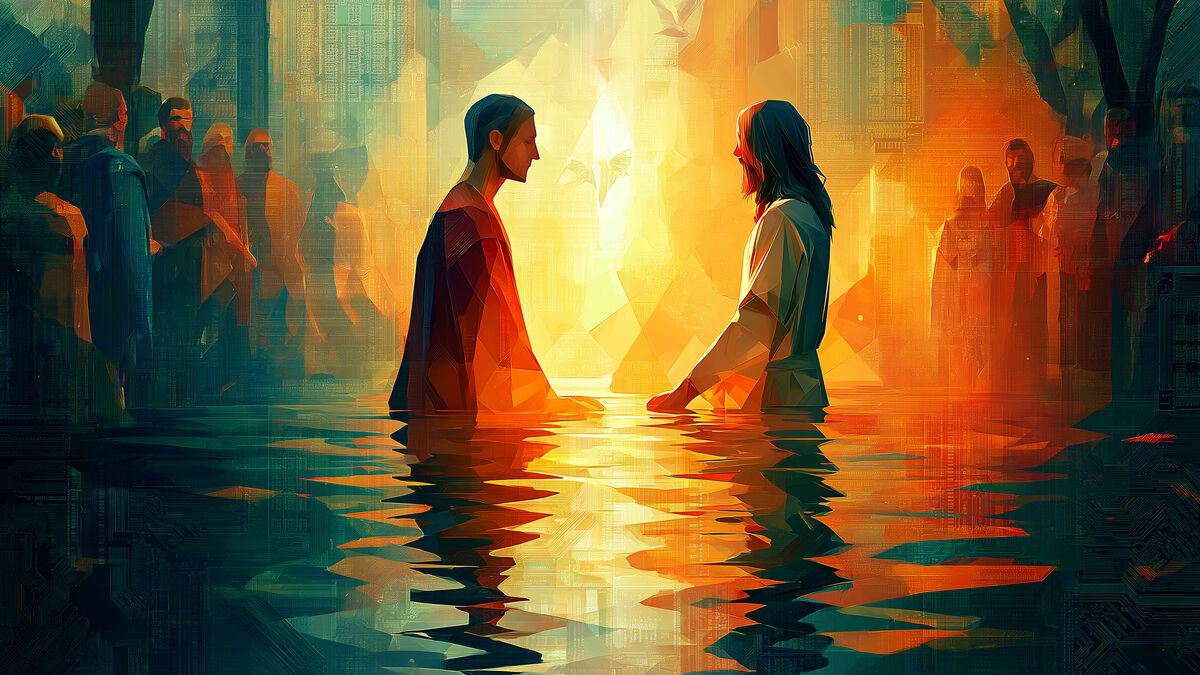
Do rituals save us? Are ordinances required for salvation or exaltation? Put differently, for those with less familiarity with religious language, are there desirable modes of existence (perhaps subsequent to death) that we cannot attain without engaging in particular rituals, perhaps performed by particularly authorized persons? For example, it is not uncommon among Christians (including Mormons) to hold that a ritual like baptism is necessary for salvation.
There are numerous ways that we answer this question. Those that posit faith in a supernatural God of unknowable mystery probably don't feel inclined to debate the matter beyond the assertion that the ritual is necessary simply because that God said so. Of course, it is really these persons themselves that are saying so, since they cannot escape the responsibility of interpretation, but we'll move along. Others might conceive of a natural God with sufficient power to enforce performance of a standard ritual prior to granting access to some mode of existence that no other has the capacity to administer. That doesn't resonate with me, and I'd question the reasoning of such a God, but I can't see why such would not be possible.
My own perspective on the matter reflects a passage of the Book of Mormon, wherein the writer offers a reason for engagement in Jewish ritual:
"Yea, and they did keep the law of Moses; for it was expedient that they should keep the law of Moses as yet, for it was not all fulfilled. But notwithstanding the law of Moses, they did look forward to the coming of Christ, considering that the law of Moses was a type of his coming, and believing that they must keep those outward performances until the time that he should be revealed unto them. Now they did not suppose that salvation came by the law of Moses; but the law of Moses did serve to strengthen their faith in Christ; and thus they did retain a hope through faith, unto eternal salvation, relying upon the spirit of prophecy, which spake of those things to come." (http://scriptures.lds.org/en/alma/25/15-16#15)
Another oft-referenced passage of the Book of Mormon encourages us to "liken all scriptures unto us, that it might be for our profit and learning" (http://scriptures.lds.org/en/1_ne/19/23#23). Let's do that with the passage of scripture above, "liken"-ing it to us by substituting "Brigham" for "Moses" (reflecting my perspective that Brigham Young fills in Mormon history a role similar to that of Moses in Jewish history):
"Yea, and they did keep the law of [Brigham]; for it was expedient that they should keep the law of [Brigham] as yet, for it was not all fulfilled. But notwithstanding the law of [Brigham], they did look forward to the coming of Christ, considering that the law of [Brigham] was a type of his coming, and believing that they must keep those outward performances until the time that he should be revealed unto them. Now they did not suppose that salvation came by the law of [Brigham]; but the law of [Brigham] did serve to strengthen their faith in Christ; and thus they did retain a hope through faith, unto eternal salvation, relying upon the spirit of prophecy, which spake of those things to come."
From this, I glean scriptural support for the idea that salvation does not come directly by outward performances or rituals, whether they are Jewish, Mormon or otherwise, but rather these rituals serve to strengthen our faith in that by which salvation comes more directly: Christ, in which name we act with charity (see some of my thoughts on this in "Practicing Atonement"). Some Mormons and other religious persons will not agree with me on this, of course; but take a moment to think through the matter from a practical perspective. Consider the many persons that have engaged in clearly immoral behavior subsequent to engaging in religious rituals. Are they saved? Do they want to be "saved"? SHOULD they be saved? Do they merit special treatment from an empowered God simply because they engaged in a particular ritual, despite their behavior? Some think so. I don't. In fact, I have no respect for any supposed God that would favor persons so arbitrarily.
Mormonism offers another piece for the puzzle: universal rituals for the dead. That's right. We're working on performing proxy baptisms and other rituals for every dead person we can identify (that includes Hitler several times over, or so I've heard). Are we doing this because these rituals actually ARE required for salvation? Does this behavior contradict the idea expressed in the Book of Mormon scripture above? I don't think so. In my estimation, it is not so much the rituals in themselves that will save the dead, but more the behavior motivated and psychology promoted by the rituals that will save the dead. Rituals for the dead motivate genealogical work, from which resurrection of the dead may be a natural long term consequence. Rituals for the dead also promote a psychology of universal charity, which is essential to improving relationships and establishing any community worthy to be considered heaven.
Do rituals save us? They serve to strengthen our faith in that which WILL save us: Christ, that which resurrects the dead and atones for sin, that which pursues and enables immortality and eternal life, that identity which we seek to take on in every way possible as joint-heirs in the glory of God, following the example and invitation of Jesus.
Will posthumans all doubt their own existence?
by
Lincoln Cannon
at
6/02/2010 01:59:00 AM
Today, Philippe Verdoux of the IEET asked, "Will posthumans all be atheists?". My first reaction was: "This is ridiculous. It's like an embryo asking whether humans will not believe in humans." I think I even mumbled it out loud, although there was no one around to hear me.
Could Philippe, like too many other atheistic transhumanists, be entirely ignorant of the probabilistic ramifications of his atheism? If there is no God, you almost certainly will not become one. In other words, if there is no posthuman that created this world, you almost certainly will not become a posthuman capable of creating worlds like it (see the New God Argument). Then I paused for a moment to remind myself (or at least to assume) that the article is probably addressing a stereotype of traditional supernatural theism, relative to which some might consider me an atheist (although I see value in aspects of it). So I opened my mind a bit and continued reading.
Then I read the references to correlations between IQ and atheism. Two problems came to mind. First, these studies appear to correlate between IQ and non-religiosity, which is not the same as atheism (most non-religious persons do not identify as atheists). Second, not all religions illustrate the same correlation; for example, it appears that higher education (which, I'm guessing, positively correlates with higher IQ) positively correlates with higher religious activity among Mormons. There is certainly something to glean from the IQ correlation observations to which Philippe appealed, but it may be something more along these lines: higher intelligence correlates with progressive spiritual perspectives, which currently tend toward non-religiosity. If that's right, I suspect the tendency toward non-religiosity is a temporary reflection of contemporary dominant religions' slow rate of adaptation. What will happen if, as a consequence of a growing void in the religous marketplace, a rapidly adapting religion eventually becomes dominant?
Finally, at the end of his article, Philippe rehashes the old atheist arguments about how religion is a principal cause of racism and violence. These arguments are controversial even among atheists; and, frankly, they are no better than those that might persuade us all to become luddites because technology is a principal cause of global catastrophic risk. The point is that religion, like technology, is power; and power is often abused, but that's only part of the picture.
I bet Philippe and I actually have a lot in common. After all, we're both transhumanists. I also highly respect the IEET. Yet I'm left wondering why they want to advocate atheism at the cost of shallow caricatures of religion and theism. I'm confident they can do better than this.
Could Philippe, like too many other atheistic transhumanists, be entirely ignorant of the probabilistic ramifications of his atheism? If there is no God, you almost certainly will not become one. In other words, if there is no posthuman that created this world, you almost certainly will not become a posthuman capable of creating worlds like it (see the New God Argument). Then I paused for a moment to remind myself (or at least to assume) that the article is probably addressing a stereotype of traditional supernatural theism, relative to which some might consider me an atheist (although I see value in aspects of it). So I opened my mind a bit and continued reading.
Then I read the references to correlations between IQ and atheism. Two problems came to mind. First, these studies appear to correlate between IQ and non-religiosity, which is not the same as atheism (most non-religious persons do not identify as atheists). Second, not all religions illustrate the same correlation; for example, it appears that higher education (which, I'm guessing, positively correlates with higher IQ) positively correlates with higher religious activity among Mormons. There is certainly something to glean from the IQ correlation observations to which Philippe appealed, but it may be something more along these lines: higher intelligence correlates with progressive spiritual perspectives, which currently tend toward non-religiosity. If that's right, I suspect the tendency toward non-religiosity is a temporary reflection of contemporary dominant religions' slow rate of adaptation. What will happen if, as a consequence of a growing void in the religous marketplace, a rapidly adapting religion eventually becomes dominant?
Finally, at the end of his article, Philippe rehashes the old atheist arguments about how religion is a principal cause of racism and violence. These arguments are controversial even among atheists; and, frankly, they are no better than those that might persuade us all to become luddites because technology is a principal cause of global catastrophic risk. The point is that religion, like technology, is power; and power is often abused, but that's only part of the picture.
I bet Philippe and I actually have a lot in common. After all, we're both transhumanists. I also highly respect the IEET. Yet I'm left wondering why they want to advocate atheism at the cost of shallow caricatures of religion and theism. I'm confident they can do better than this.
Subscribe to:
Posts (Atom)