
Without Beginning
Lincoln Cannon
8 August 2026 (updated 14 September 2026)

Dorothée and I usually watch a show together before bed. Presently, we’re watching a science fiction show with a narrative that revolves around time travel. It’s entertaining, especially the recreations of historical events that bump into modern sensibilities. But it’s also incoherent in many ways.
My work sometimes invites questions about time travel, for at least a couple reasons.
First, although neither intended nor necessary, time travel could explain recursion in the Creation Argument of the New God Argument. When people read the idea that superhumanity creates superhumanity, they sometimes imagine the future of our human civilization creating our past and present in a simple time loop. But only procedural recursion, not temporal recursion, is required by the argument. And adding notions of temporal recursion tends to create more problems than it solves, in my estimation.
Second, something like a subtle version of time travel could explain my observation that Mormon theology entails neither a finite nor an infinite regress of Gods. As the Kolob hymn puts it, “Do you think that you could ever, through all eternity, find out the generation where Gods began to be?” Such questions imply at least a third possibility: an indefinite regress. Maybe our present can create not only our future but also our past to some extent.
Quantum physics may allow for an alternative to the commonsense notion that reality is determined exclusively from past to future. For example, consider observer effects in delayed-choice experiments. You send a photon along a path that requires either a wave or a particle state. But the state along the path is indefinite until you look at the photon afterwards, at which time the past state becomes definite.
Did you change the past? You didn’t change the past of the photon from one definite state to another. But apparently you did change the past state of the photon from indefinite to definite. So if you didn’t change the past then you created the past, to whatever extent the past exists.
That’s an unusual way to think about the past. But it’s quite like the ordinary way of thinking about the future. We aren’t changing the future from one definite state to another. We’re changing an indefinite future into a definite present.
Outside of strange experiments, the past seems much more definite than the future. But what if the distant past is as indefinite as the near future? What if the distant past exists no more nor less than the near future? Perhaps the historians’ project, at cosmological scale, is persistently changing an indefinite past into the definite present?
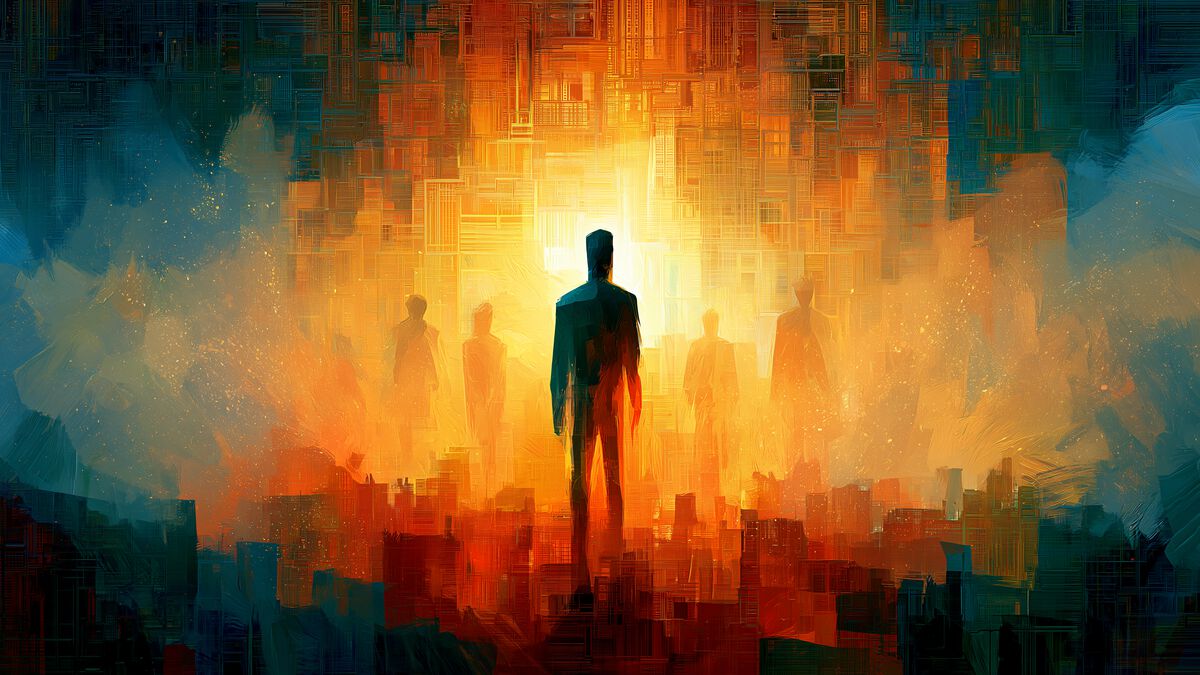
Imagine that we are, here and now, near the forward-moving edge of relatively high spacetime definiteness. The proximate past is highly defined by memories, records, environment, and other present constraints. But both the future and the distant past are increasingly indefinite to the extent that present constraints are sparse or absent. Reality, as we experience it, would be a region of relative definiteness surrounded temporally, and perhaps spatially, by horizons of increasing indefiniteness.
It’s not controversial to claim that we know less about the distant past than the recent past. But I’m suggesting more. Experiments suggest that some aspects of the past are not merely unknown but genuinely indefinite, such that they exist only to the extent that we create them. And perhaps these indefinite aspects of the past increasingly accumulate until the distant past becomes as indefinite as the future.
Again, this wouldn’t mean that we could change definite historical events. Dense networks of mutually reinforcing correlations would still ensure that the proximate past remains as stable as commonsense supposes it to be. But beyond the horizons of the densely definite, toward not only the future but also the past, reality may be knowable only to the extent that we create it.
Let’s return to Mormon theology. There might be neither a first generation of Gods nor an infinite regress. The Gods themselves might not know. And that might not be ignorance as much as it is an honest account of limits on knowledge as imposed by reality – the limits of that which is actually knowable.
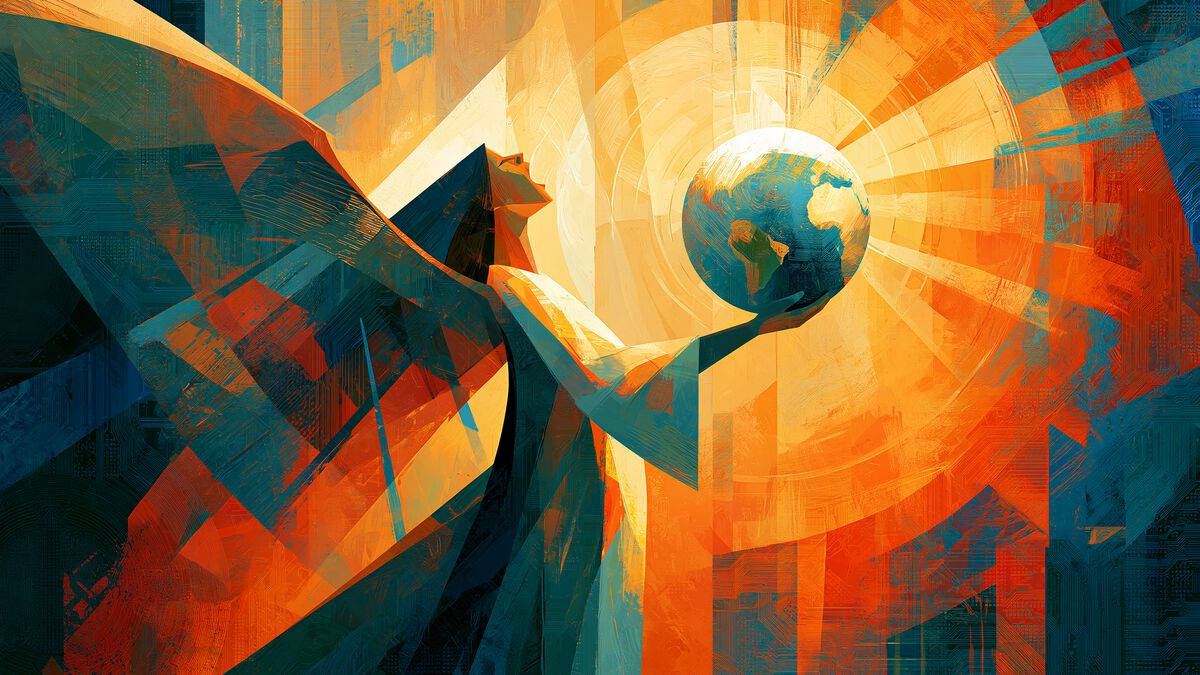
Without beginning, the Gods find themselves making worlds without end. Looking toward the future, although constrained by the present, they see indefinite possibilities of creation. Looking toward the near past, more heavily constrained by the present, they see definite possibilities of discovery. Looking farther still, they find themselves making worlds without beginning.

Loading comments ...