
Problem of Evil
The problem of evil on this site is the challenge of reconciling suffering and malice with trust in a good God. Lincoln distinguishes natural evil, moral evil, and the free will defense while exploring whether horrendous evils count as evidence against God. His articles connect the problem to superintelligence, simulation, resurrection, compassionate superhumanity, and decentralized cooperation. The topic lists articles relevant to dialogue with atheist critics and the New God Argument.
This is a list of articles that Lincoln Cannon has written about the problem of evil. A full archive of all articles that Lincoln has published since 2005 is also available. You may also search for articles and other content that's available on any of Lincoln's websites.
-

Why Decentralization Is Essential to Human Thriving
Decentralization of power, whether we characterize that power as technological or otherwise, is essential to increasing the probability of a thriving human (or superhuman) future. There’s a line of reasoning that persuaded me of this conclusion. It consists of three steps. Before I share the three steps, I should explain ... -

New God Argument Version 3.4
On Saturday 3 August, I presented the New God Argument at the Sunstone conference in Salt Lake City. As part of the presentation, I simplified the formulation of the Compassion Argument slightly. And I spent more time than usual elaborating on how the first assumption of the Compassion Argument arises ... -

The Semi-Orthogonality Hypothesis
In his Orthogonality Thesis, Nick Bostrom proposes that “intelligence and final goals are orthogonal: more or less any level of intelligence could in principle be combined with more or less any final goal.” However, there’s a problem hinted at by the combination of “orthogonality” and “more or less.” Nick acknowledges ... -

Evil Gods Will Rise and Fall They Must
Technology is power, which may be used for good or evil. And technological trends increasingly suggest our future will include technology and its associated power beyond our present ability to imagine. The Benevolence Argument of the New God Argument concludes that any posthumanity, radically creative to the point of metacreativity ... -

Would It Be Moral to Create a World like Ours?
I trust our world was created by God, a radically compassionate posthumanity. After expressing this trust recently on the Singularity 1 on 1 podcast, a commenter asked how I justify the morality of creating worlds like the one we’re now living in. Or, put differently and in traditional terms: how ... -

Becoming God Can Be Cruel and Irrational
“God is cruel,” says Hank Pellissier, managing director of the Institute for Ethics and Emerging Technology. Here are my thoughts in response. Hank, there’s considerable irony in your post. The charge that theism is illogical presents significant practical and logical challenges for a Transhumanist. You trust in humanity’s posthuman potential. ... -

Living in an Undecidable Halting Problem of Evil?
For some computer programs, we can know in advance how they will run, when they will stop, and what results they will return. However, there are other computer programs that are undecidable halting problems: we cannot know, without actually running them, whether they will ever stop running, let alone what ... -

Gods of Suffering and Oppression
In response to the New God Argument, an anonymous commenter requested my thoughts on the following David Pearce quote. David is a Transhumanist philosopher whom I respect a great deal, despite some differences of perspective. He calls into question the benevolence of posthumans: “Of all the immense range of alternative ... -

Can Non-Benevolent Super-Intelligence Persist?
Recently, Joshua Fox gave an insightful presentation on why “super-intelligence does not imply benevolence.” Thanks to Michael Anissimov for bringing this to my attention. Joshua identifies two kinds of benevolence: instrumental and axiomatic. And he argues that neither is a necessary outcome for super-intelligence. He observes that instrumental benevolence results ... -

Perspective on the Benevolence Argument
On the Mormon Transhumanist Association Response blog, Vblogger has commented on the New God Argument. Below are my thoughts in response to those comments. I already published a first response, a second response, a third response, and a fourth response to other comments on her blog. The question of whether ... -
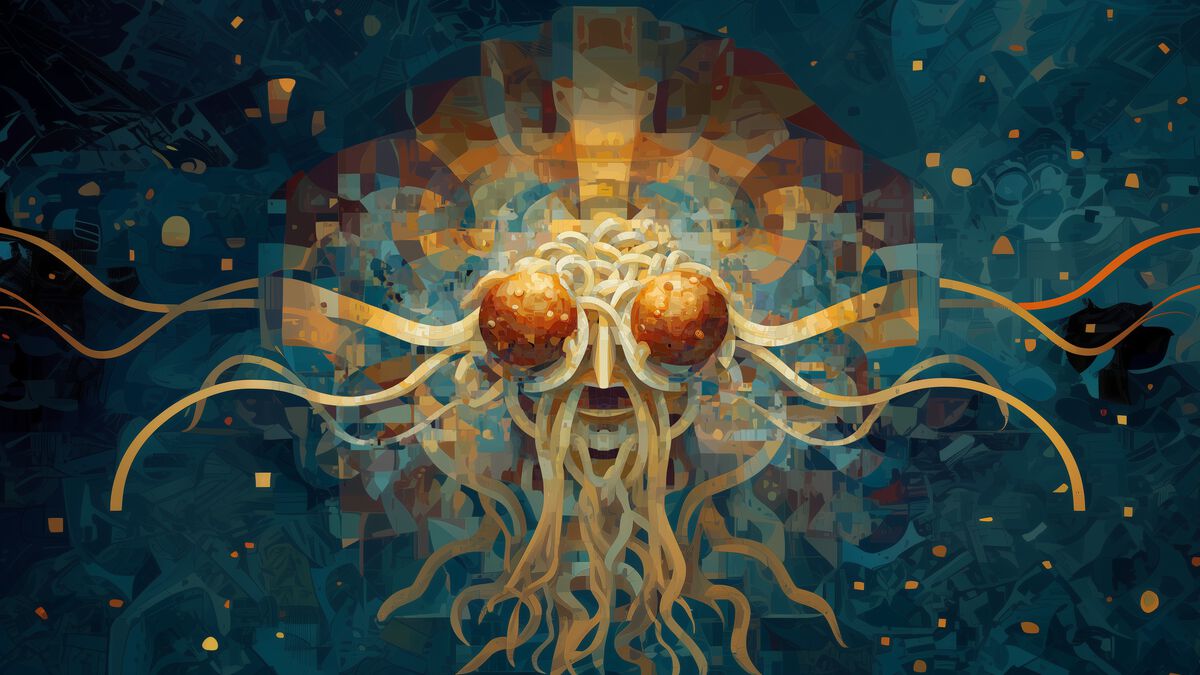
If That's God, I'm an Atheist Too
Religion is a controversial topic among Transhumanists. Although the majority identify as atheists and agnostics, a substantial minority find Transhumanism to be complementary with or even inherent in their spiritual or religious views. Of course, this results in friction, which in turn generates both some traction of constructive debate and ... -

Messianic Postures toward Artificial Intelligence
Observing trends in information technology, some researchers conclude that artificial intelligence (AI) will eventually surpass the brightest human minds and take control of its own evolution. Assuming these researchers are correct, it is in our interest to ensure that we design AI to be friendly from the beginning. Whether AI ...