
Active versus Passive Christianity
Lincoln Cannon
29 March 2026 (updated 14 October 2026)
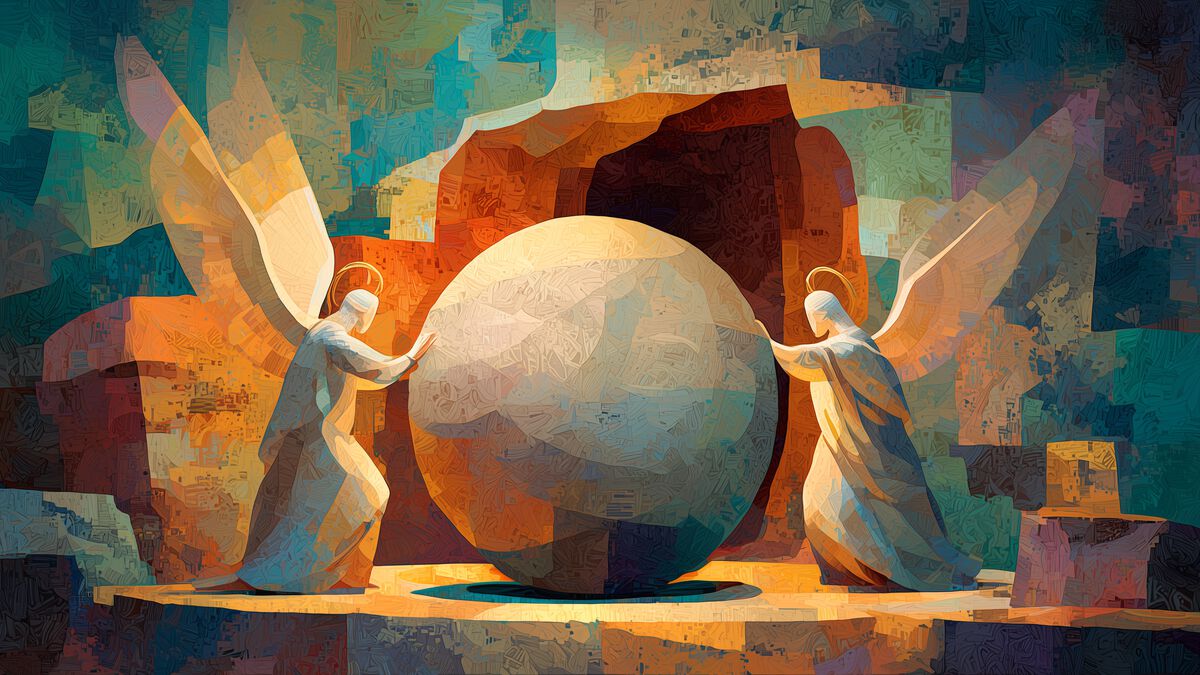
At Easter, Christians celebrate the Atonement and Resurrection of Jesus Christ – the culminating expressions of the compassionate and creative power of God in the exemplary life of Jesus. Arguably, at least from a theological perspective, Easter is more important than Christmas. Easter ultimately realizes that which Christmas originally envisions. But too many of us, too often, celebrate the realization of Christian vision with passive interpretations that weaken or altogether undermine the real practical power of our faith.
To illustrate, I list in the table below several important Christian concepts. Each is followed by two additional columns. The first provides a passive interpretation of the concept, as is too commonly imagined by nominal faith. The second provides an active interpretation of the concept that provokes the power of real faith.
Before sharing the list, I want to emphasize that I don’t consider these interpretations, either the passive or the active, to be the only such interpretations of Christianity. There are many others, quite as common or as genuine, that I could include to illustrate both approaches to interpretation. These are only examples.
| Concept | Passive | Active |
|---|---|---|
| Atonement | Christ already reconciled us to God, so we need only accept it. | We participate in Atonement by working to become one with God and each other. |
| Baptism | A ritual we undergo to mark membership in the Church. | An immersion in the work of Christ that transforms how we live. |
| Charity | Being nice and donating when convenient. | The pure love of Christ, practiced as kindness, sacrifice, and endurance. |
| Christ | A divine title belonging to Jesus alone. | The anointed role of Atonement that Jesus exemplified and invited us to share. |
| Church | The building we attend on Sundays. | A community of people actively organizing to serve and become one. |
| Covenant | A promise we made once and hope God remembers. | A living mutual commitment between us and God, renewed through ongoing action. |
| Creation | Something God finished long ago. | An ongoing process in which we participate as compassionate creators. |
| Discipleship | Calling ourselves followers of Jesus. | Actively learning, imitating, and extending the work Jesus began. |
| Faith | Believing that certain doctrines are true. | Practical trust toward desired ends, consistent with our best knowledge. |
| Forgiveness | Expecting God to overlook our mistakes. | Actively releasing resentment and working to restore broken relationships. |
| God | A distant being who controls everything from above. | The compassionate intelligence we trust, emulate, and are becoming. |
| Grace | A free gift that requires nothing from us. | The enabling power of possibility that transcends what we can do alone. |
| Heaven | A place we go after we die if we believe correctly. | A quality of thriving community we create and experience together. |
| Humility | Thinking poorly of ourselves before God. | Honest recognition of our limitations, opening us to learning and growth. |
| Immortality | Living forever somewhere else after death. | Overcoming death through transformation, both spiritual and physical. |
| Incarnation | God became flesh once in Jesus. | God is embodied, and embodiment is the means of divine expression and action. |
| Judgment | God will punish the wicked and reward the righteous. | Discerning between paths that lead to thriving and paths that lead to destruction. |
| Mercy | God choosing not to punish us as we deserve. | Actively extending compassion to relieve suffering, as Christ exemplified. |
| Obedience | Following rules to avoid punishment. | Aligning our actions with principles that promote genuine thriving. |
| Prayer | Asking God to solve our problems for us. | Focusing our intention and energy toward the work we’re called to do. |
| Priesthood | Authority held by a select few to perform rituals. | The shared responsibility to minister, serve, and act in God’s name. |
| Prophecy | Predicting the future from an armchair. | Forthtelling that provokes us to create a better future together. |
| Redemption | Being rescued from sin without effort on our part. | Being transformed and restored through courageous engagement with the world. |
| Repentance | Feeling guilty about sin and asking for forgiveness. | Actively changing direction toward greater compassion and creation. |
| Resurrection | Our dead bodies magically reanimated someday. | Radical physical transformation, overcoming death through real means. |
| Revelation | God spoke in the past and we just read about it. | Ongoing discovery of truth through spiritual and intellectual engagement. |
| Sacrament | A ritual we observe out of habit. | A practice that renews our commitment and transforms our character. |
| Sacrifice | Something painful that God demands of us. | Willingly giving of ourselves to serve others and build something greater. |
| Salvation | Escaping this world for a better one. | Being empowered to transform this world into something worth saving. |
| Sanctification | God magically making us holy. | The ongoing process of becoming more compassionate, creative, and Christlike. |
| Scripture | An ancient text that contains all the answers. | A living library of wisdom that provokes ongoing reflection and action. |
| Spirit | An immaterial ghost that haunts our bodies. | The animating power within and among us that inspires and connects. |
| Stewardship | Taking care of what God gave us until he returns. | Actively managing and improving our resources and world as creators. |
| Transfiguration | A miraculous event that happened to Jesus on a mountain. | The real transformation of our minds and bodies toward superhuman capacity. |
| Trinity | An abstract mystery we affirm but don’t understand. | The dynamic relationship of creator, exemplar, and enabling power at work in us. |
| Witness | Telling others what we believe. | Living and demonstrating the transformative power of our trust in Christ. |
The apostle Paul writes, “I have been crucified with Christ and I no longer live, but Christ lives in me.” And in case that isn’t enough, he continues, “Now I rejoice in what I am suffering for you, and I fill up in my flesh what is still lacking in regard to Christ’s afflictions, for the sake of his body, which is the church.” This is, he concludes, how “God has chosen to make known … the glorious riches of this mystery, which is Christ in you, the hope of glory.”
This isn’t passive faith. Neither is it a rejection of grace. Rather, it’s a recognition of grace in the power of possibility that transcends anything we can do alone. Paul’s faith rejects passive interpretations of Christ that could become excuses for inaction.
Like Paul, we can have a practical and bold faith in Jesus Christ. We can actually trust in and work toward consoling the sad, healing the sick, and even raising the dead, as he repeatedly exemplifies and invites. If we take Jesus seriously, Atonement and resurrection aren’t just miraculous events that we commemorate once a year. They’re mandates that would prophetically provoke us to engage in real work with real means afforded by real grace to overcome suffering and death, for eternal life that is as real as light and as warm as love.
This Easter, I hope we choose the active interpretation. Not because the passive is always wrong, but because it’s almost always insufficient. The full power of Christianity has never been in merely believing in Jesus. It’s always been in trusting his invitation to participate in Christ, in courageously becoming compassionate creators who work together to transform our world into something worth saving.



Loading comments ...