
Sankofa Futurism
Lincoln Cannon
28 November 2025 (updated 14 October 2026)

When we think about the origin of Transhumanism, we often think about Europe and America: from Enlightenment humanism, through the industrial revolution, and onward to Silicon Valley. That conception is true enough, if we’re thinking about Transhumanism in name. But if we’re thinking about Transhumanism in function, there’s much more to the story. And that story is as old and diverse as humanity itself.
Modern use of the word “transhumanism” may come from Julian Huxley, an evolutionary biologist in the 1950s. His younger brother, Aldous Huxley, popularized the concept known as “perennial philosophy.” It’s basically the idea that all the world’s major religions, cultural traditions, and ancient myths have common core elements. Prominent among them is humanity’s shared aspiration for transcendence, both physical and cognitive, reflecting a much older theological use of “transhumanize” in Dante’s Paradiso.
A contemporary of the Huxley brothers, Joseph Campbell mapped perennial philosophy onto a concept that he called “monomyth.” His insight was that we express perennial philosophy through perennial narrative. In other words, all our cultural traditions tell stories with common core elements. And Campbell focused, in particular, on what he described as the “hero’s journey” – or what we might understand as humanity’s shared story of transcendence.
Perennial philosophy and monomyth don’t originate in Europe or America, at least not uniquely. Humanity’s shared aspirations and stories of physical and cognitive transcendence – that is to say, stories that function as Transhumanism – stretch back through time to the dawn of history. And, of course, that includes Africa.
So today, as we imagine how best to express Transhumanism in persuasive and helpful ways – in ways that will actually prove transformative – I commend to you an idea that comes from the Akan people in West Africa. That idea is Sankofa, or what we might call “Sankofa futurism.” It’s symbolized by a mythical bird that’s moving forward while reaching back for an egg. And it literally means, “go back and get it,” or use wisdom from the past to make the future better.
In that spirit, I’ve collected some traditional stories from Africa. They represent the ancient and enduring human aspiration to transcendence, across the spectrum of physical and cognitive capacity. In function, they’re Transhumanist stories. Or at least they can be, if we choose to interpret them in light of modern science and emerging technology, as I’ll illustrate.
Anansi and the Singularity

Akan people tell of the trickster Anansi, who attempts to centralize the world’s data into a single proprietary database, intending to become the sole administrator of knowledge. He successfully scrapes wisdom from every corner of the globe, but he finds the server too heavy to carry up the tree of life alone. When a glitch in his user interface causes him to drop the container, the data is decentralized into the winds. Anansi’s story foreshadows the Transhumanist debate about technological singularity, and the risks of a singleton superintelligence.
Isis and Immortalism
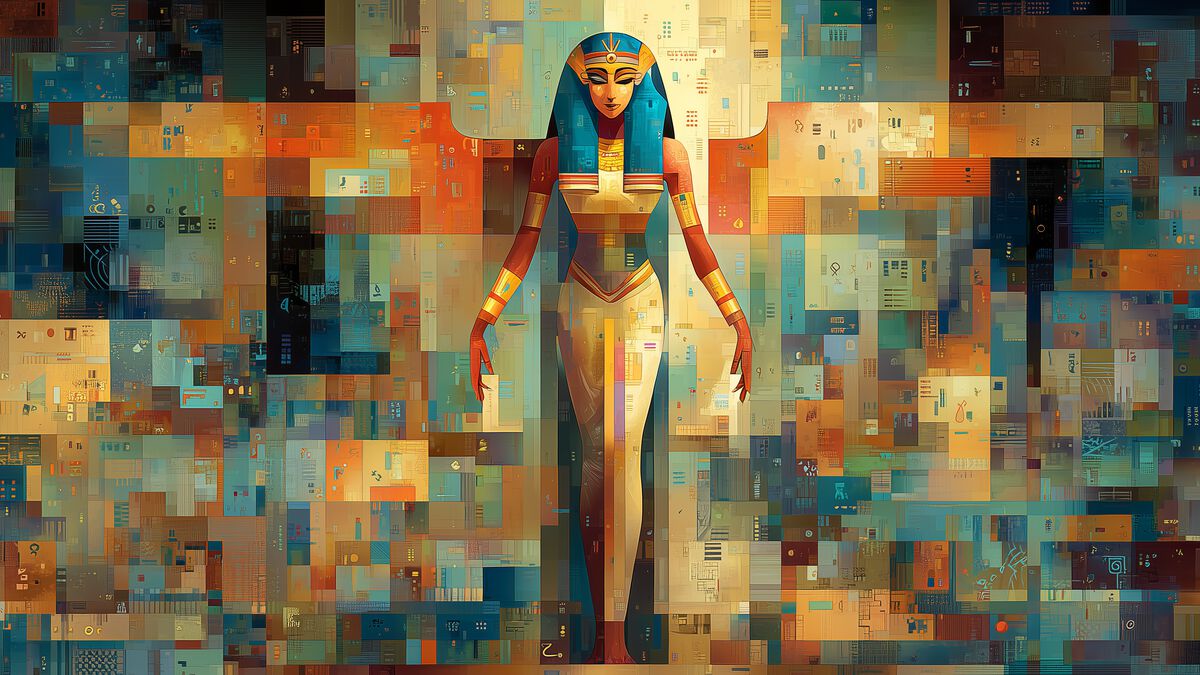
In the sacred texts of Egypt, Isis refuses to accept the annihilation of Osiris after his brother hacks his body into scattered pieces. She initiates a forensic search across the cosmos, retrieving fragments of information and painstakingly reassembling the pattern of his body. Ultimately, her project succeeds: his body reboots and his mind returns, surviving the destruction of its former physical substrate. Isis’ story anticipates the Transhumanist narrative of immortalism: that with sufficient data, death is curable rather than final.
Modjadji and Paradise Engineering

Balobedu people describe Modjadji, a matriarch who possesses biotech that can control local weather patterns. She uses secret codes to regulate precipitation, ending droughts or summoning storms as a defense mechanism. Her dynasty passes an encryption key genetically, from mother to daughter, maintaining a civilization that actively solves problems of scarcity and environmental threat. Modjadji’s story suggests the Transhumanist narrative of paradise engineering: that we have a moral obligation to mitigate involuntary risk of suffering.
Nana Miriam and Nanotechnology
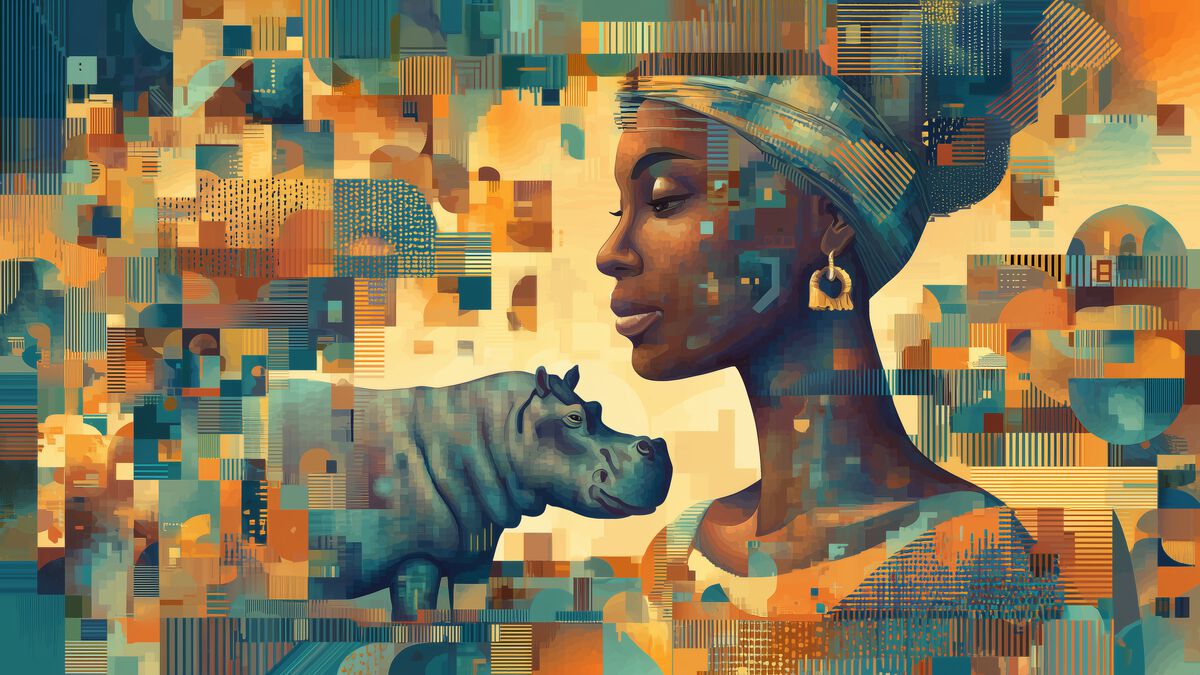
Songhai people tell of the sorceress Nana Miriam, who confronts a shape-shifting beast that instantly adapts its physical form to shatter any conventional weapon. She defeats this rapidly evolving threat not with brute force, but by using a specialized powder to reconfigure molecular structures in real time. When the beast transforms into a wall of raging fire, she deploys the substance to transmute the flames into water, neutralizing the attack instantly. Nana Miriam’s story prefigures the Transhumanist ambition of nanotech, with programmable matter.
Nommo and Cosmic Expansion

Dogon elders describe the arrival of Nommo, amphibious masters who descend from the Sirius star system in a massive ark to terraform the Earth. They crash-land in a technological vessel, bringing with them “cosmic fibers” necessary to program the planet’s ecosystem. They organize the chaotic primordial world into a habitable biosphere before returning to their aquatic domain. Nommo’s story aligns with the Transhumanist narrative of cosmic expansion, suggesting that intelligence has a duty to spread life and order beyond its origin.
Obatala and Morphological Freedom
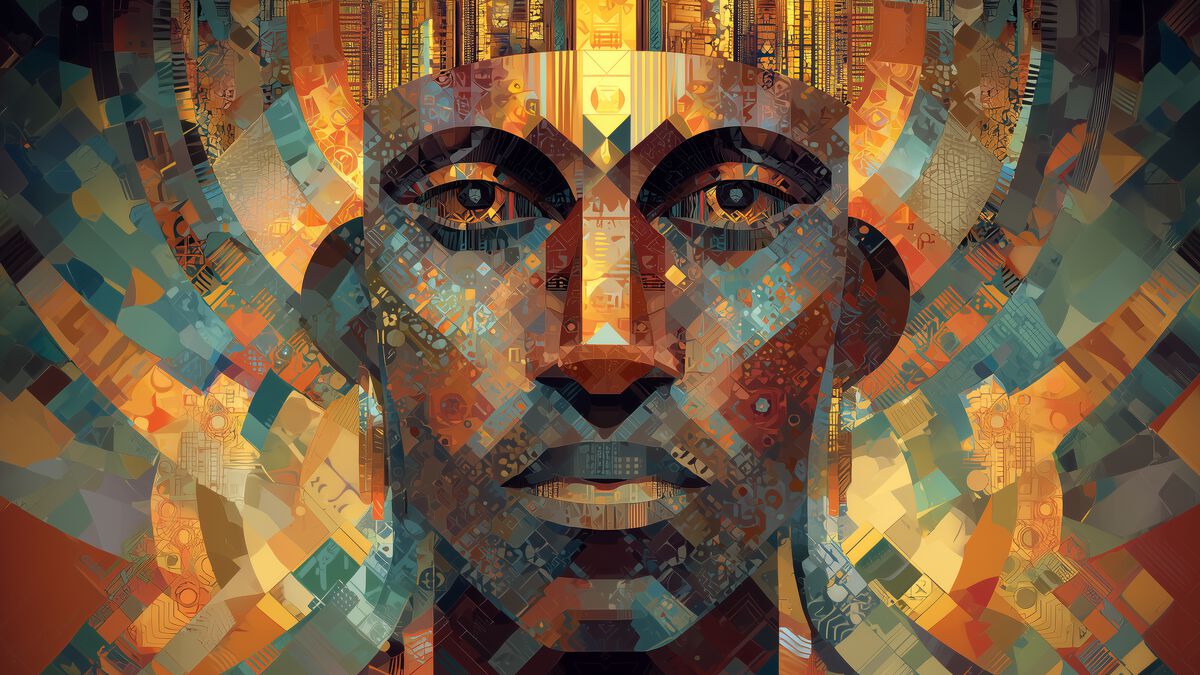
Yoruba people speak of the engineer Obatala, who descends from the sky to form the first human bodies from clay into biological machines. During the development process, Obatala gets drunk on palm wine and his hands slip, causing glitches in the physical forms. Instead of hitting delete when he sobers up, he claims these divergent bodies as his children, refusing to view them as errors. Obatala’s story affirms the Transhumanist principle of morphological freedom, that there is no rigid human template, but diverse beautiful expressions of being.
Ogun and Technological Imperative
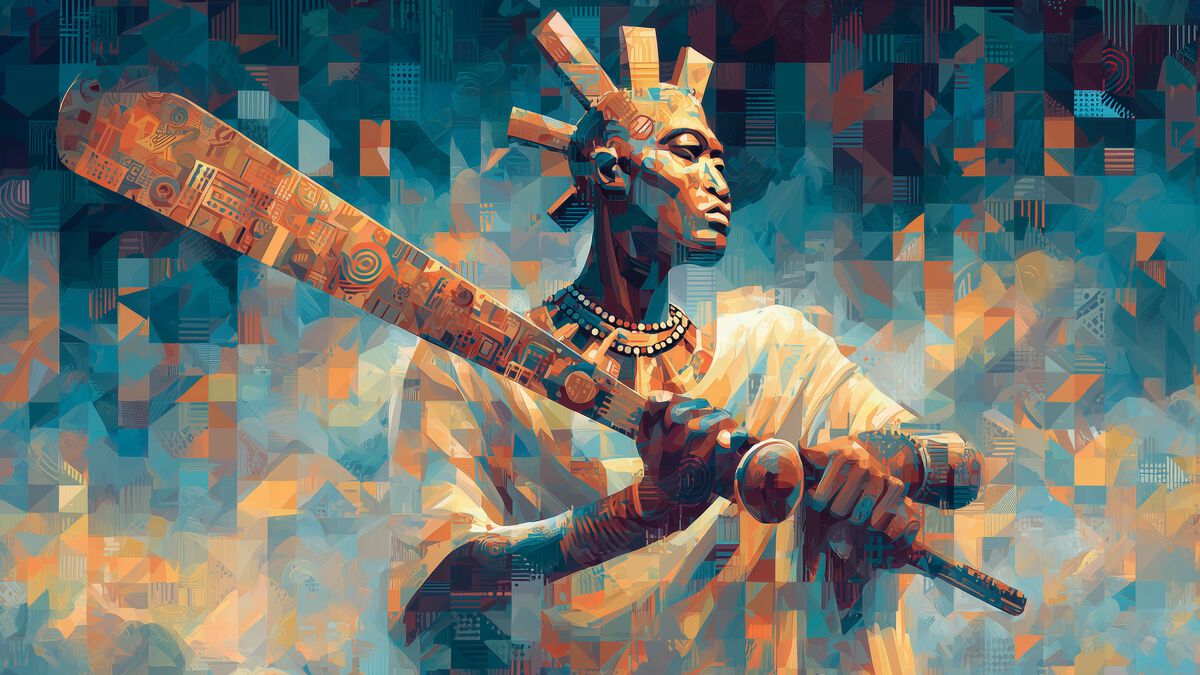
When Gods of the Yoruba people attempt to inhabit the Earth, they find their path blocked by an impenetrable chaotic thicket that resists their strength. Ogun, the God of iron, retreats to his forge to engineer a solution, crafting a massive iron machete to hack a path for civilization through this biological firewall. Ogun’s story illustrates the fundamental Transhumanist conviction that we are defined not by biological constraints, but by capacity to engineer our way past them.
Conclusion
When we apply Sankofa to these stories, we’re not just reciting folklore. Rather, like the mythical bird, we’re retrieving the egg of ancient aspiration. And of course aspiration isn’t about the past. Aspiration is about the future.
Sankofa Futurism connects our past to our future, through our ancient and enduring aspiration to transcendence. Traditional narratives generate unparalleled emotional power at the scale of culture, which can complement the illuminating rational power of Transhumanism, if we choose. And we’re never more powerful for good – our people, and humanity as a whole, are never more powerful for good – than when the reason in our mind is aligned with the story in our heart.
An edited version of this presentation appears in Proceedings of the World Congress on Transhumanism. You may download the accepted manuscript for free.



Loading comments ...